The Frailocracy
In the official hierarchy of the Philippines in 1874, the Governor-General residing in Malacañang Palace was the supreme authority, the direct representative of the Spanish Crown and the Vice-Regal Patron of the Church. However, to the average resident—from the principalía elite in the provincial capitals to the tenant farmer in the rice fields—real power resided elsewhere. It lived in the massive stone convents of Intramuros and the fortified parish houses of the provinces. It was wielded by men in habits: the "Frailocracy" (La Frailocracia).
By the 1870s, the Spanish religious orders had evolved from the pioneering, self-sacrificing missionaries of the 16th century into an entrenched socio-political monolith. While the civil administration was plagued by constant turnover—Governor-General Izquierdo was replaced by Juan Alaminos y de Vivar in 1873, who was himself soon succeeded—the friars remained. They were the permanent fixtures of colonial life, speaking the local languages that most transient civil officials never mastered, and holding the keys to local administration, education, and the souls of the populace.
The Four Pillars of Power
The "Frailocracy" consisted primarily of the four major orders of "regulars"—clergy who lived under a specific rule (regula) and belonged to international religious organisations, as opposed to the "secular" clergy who were under the direct jurisdiction of the local bishop.
- The Augustinians (O.S.A.): The first order to arrive in 1565, they held the most prestigious and ancient parishes. Their wealth was anchored in vast agricultural estates and the spiritual patronage of the most populous regions of Luzon and the Visayas.
- The Dominicans (O.P.): The Order of Preachers possessed immense intellectual and economic influence. They operated the University of Santo Tomas (UST) and controlled significant haciendas in the provinces of Laguna and Cavite, which served as the primary source of their corporate wealth.
- The Franciscans (O.F.M.): Custodians of many parishes in the Tagalog region and Bicol, they were known for their extensive involvement in local hospital work and charities, which granted them a unique level of intimacy with the daily lives of the peasantry.
- The Recollects (O.A.R.): The last of the major orders to arrive, they often held parishes in more remote or difficult frontier areas. However, in the mid-19th century, they were strategically gifted lucrative parishes in Cavite and Manila at the expense of the native secular clergy—a move that significantly exacerbated racial and political tensions.
The Jesuits (Society of Jesus), having been expelled in 1768 and only permitted to return in 1859, occupied a separate and often friction-filled position. Focusing on education at the Ateneo Municipal and missions in Mindanao, they were frequently at odds with the older friar orders regarding modern scientific methods and jurisdictional rights.
The Curate as King: The Mechanics of Local Control
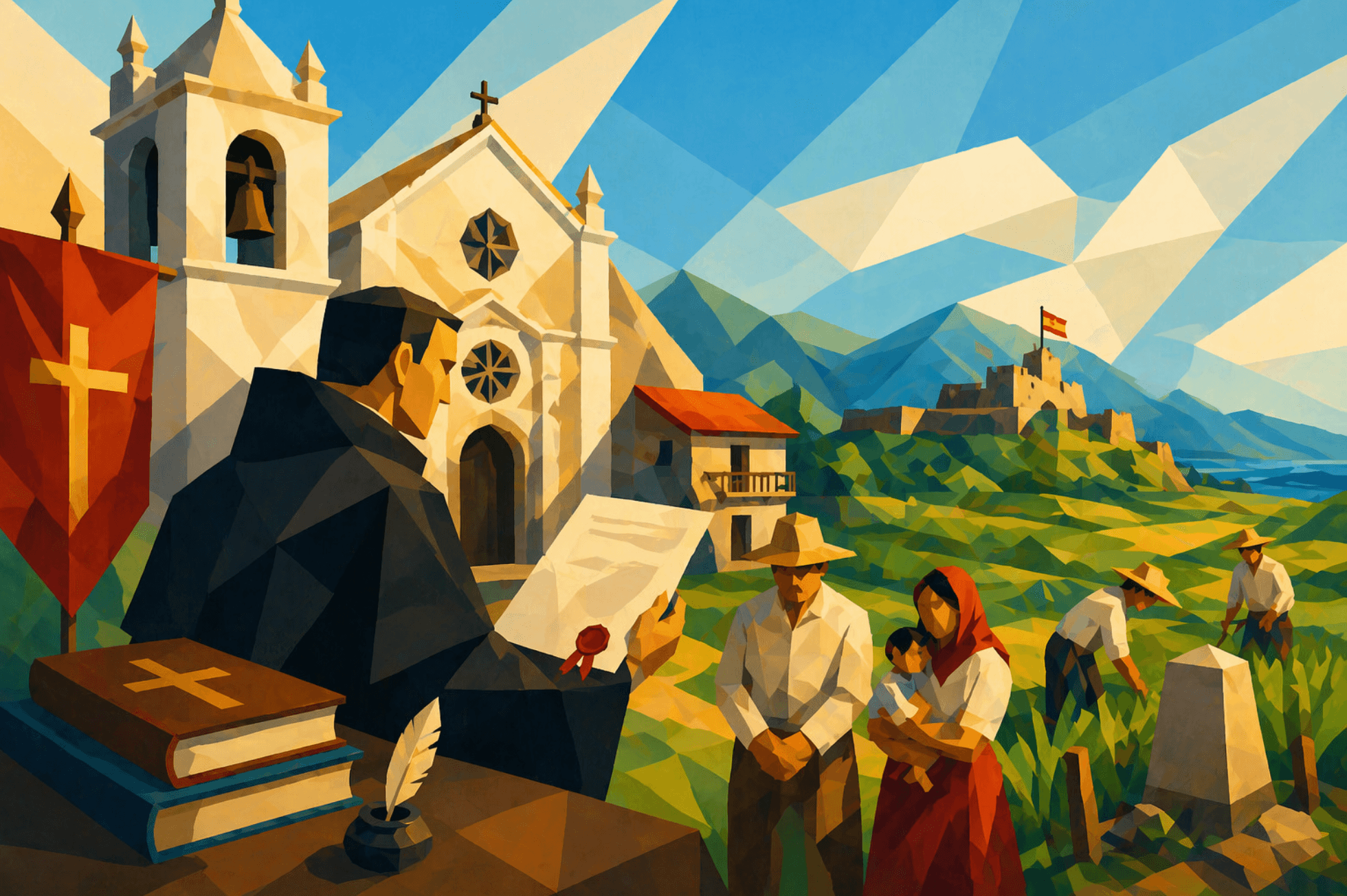
In 1874, in the majority of Philippine towns (pueblos), the Spanish friar-curate (cura párroco) was the only European resident. This geographical isolation granted him a level of authority that no distant Governor-General could hope to match. He was not merely a spiritual shepherd; he was a civil functionary with an exhaustive list of responsibilities.
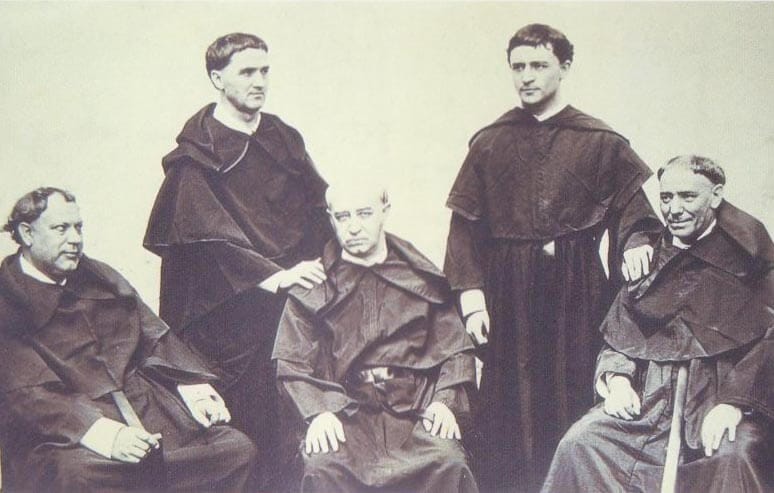
Under the colonial laws of the time, the friar served as the Inspector of Schools, the President of the Health Board, the Inspector of Taxation, and the certifier of the padrón (census). No municipal budget could be passed, no local teacher hired, and no citizen's character verified without the priest's visto bueno (approval).
In the climate of suspicion following the 1872 Cavite Mutiny, this administrative power was effectively weaponised. A confidential report from a friar identifying a local resident as a filibustero (subversive) or "anti-Spanish" was considered sufficient grounds for immediate imprisonment or deportation to the Marianas Islands without trial. The friar was the "eyes and ears" of the central government, a reality that Governor-General Izquierdo had openly acknowledged and utilised to maintain order through a pervasive system of local surveillance.
The Haciendas: Land and Conflict
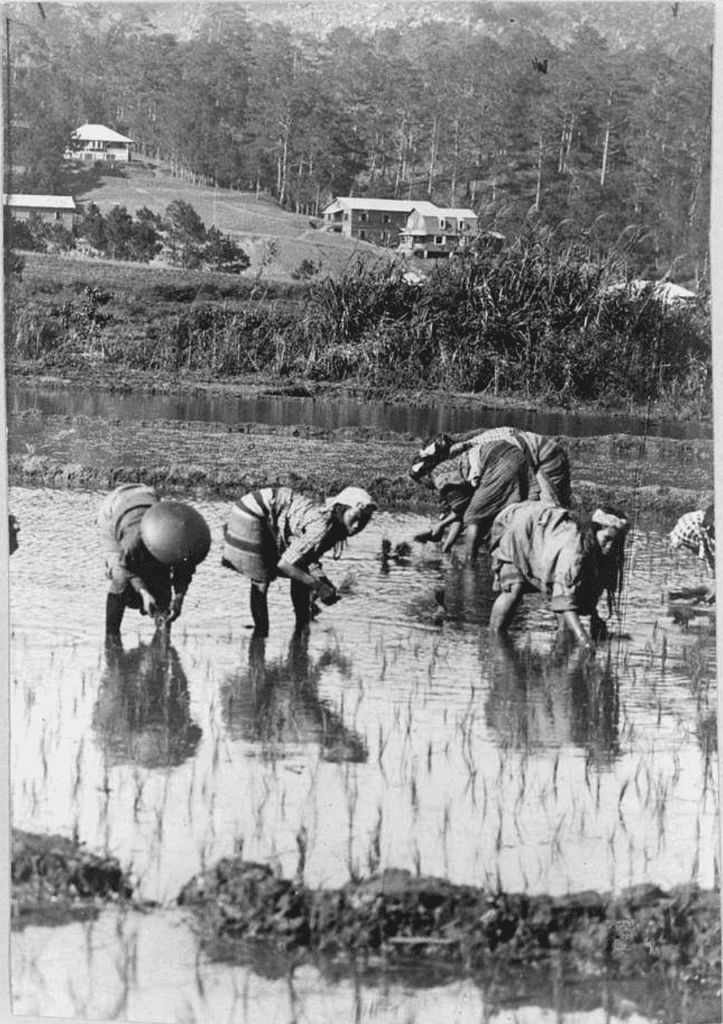
The economic foundation of the Frailocracy lay in its ownership of vast agricultural estates, or haciendas. By the 1870s, the Dominicans, Augustinians, and Recollects owned a substantial portion of the most fertile cultivated land in the provinces surrounding Manila. These estates produced the sugar, rice, and indigo that fuelled the colony’s export economy.
However, these lands were also the primary source of agrarian friction. The relationship between the religious corporations and their tenants (inquilinos) was defined by a lack of formalised contracts and a system of arbitrary rent increases known as the canon. Disputes often arose when the orders expanded their estate boundaries into what the villagers considered communal lands or "no man’s land."
In The Mariquina Manuscript, the fictional dispute regarding the Hacienda Rizalino mirrors these historical realities. During this period, land ownership was often predicated on ancient, hand-written documents held within the inaccessible archives of the religious orders. For a tenant farmer or a mestizo merchant, challenging a friar-haciendero in court was an exercise in futility, as the judicial system was itself heavily influenced by the same religious interests.
Control of the Mind: Education and Hegemony
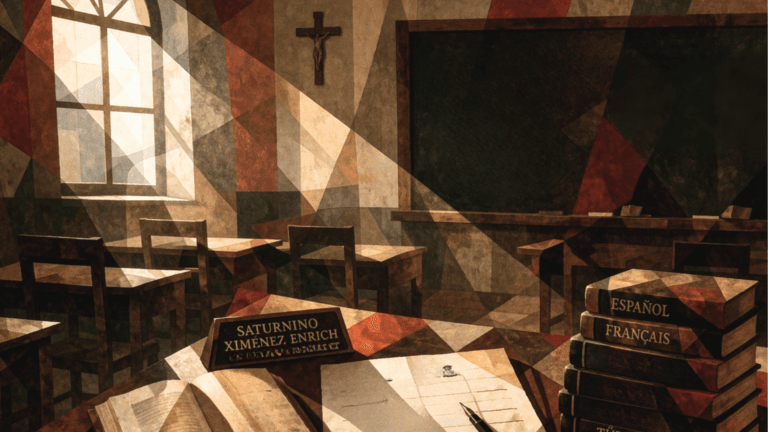
The religious orders maintained a strict monopoly on higher education. While the Jesuits offered a more modern, scientifically-inclined curriculum at the Ateneo, the overarching educational philosophy of the archipelago remained deeply conservative. The University of Santo Tomas, managed by the Dominicans, was the only institution in the colony permitted to grant degrees in law, medicine, and theology.
Furthermore, the friars sat as permanent members of the Comisión Permanente de Censura. This body ensured that liberal ideas from Europe—concepts of constitutional rights, secularism, or democratic representation—were intercepted at the customs house. By controlling both the classroom and the library, the Frailocracy attempted to create an intellectual firewall around the archipelago, protecting it from the contamination of modern political thought.
The Reactionary Restoration
The dominance of the Frailocracy in 1874 was, in part, a defensive reaction. The orders felt under siege by the "Secularisation Movement"—the campaign to transfer parish administration from the Spanish friars to the native Filipino secular clergy. The execution of Fathers Gomez, Burgos, and Zamora in 1872 was viewed by the religious orders as a necessary victory, a decapitation of the movement that challenged their hegemony.
By 1874, the friars were in a period of "reactionary restoration." Emboldened by the state’s crackdown on liberals, they reasserted their dominance over provincial life, viewing any challenge to their authority—be it a land dispute or a request for better schools—as an act of sedition against the Spanish Crown itself.
The Visual Landscape of Power
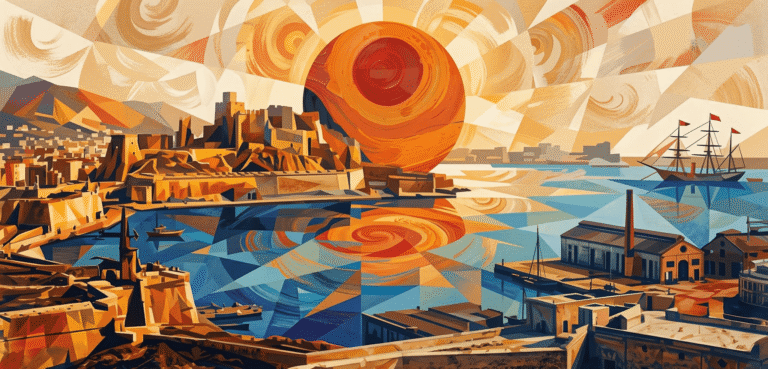
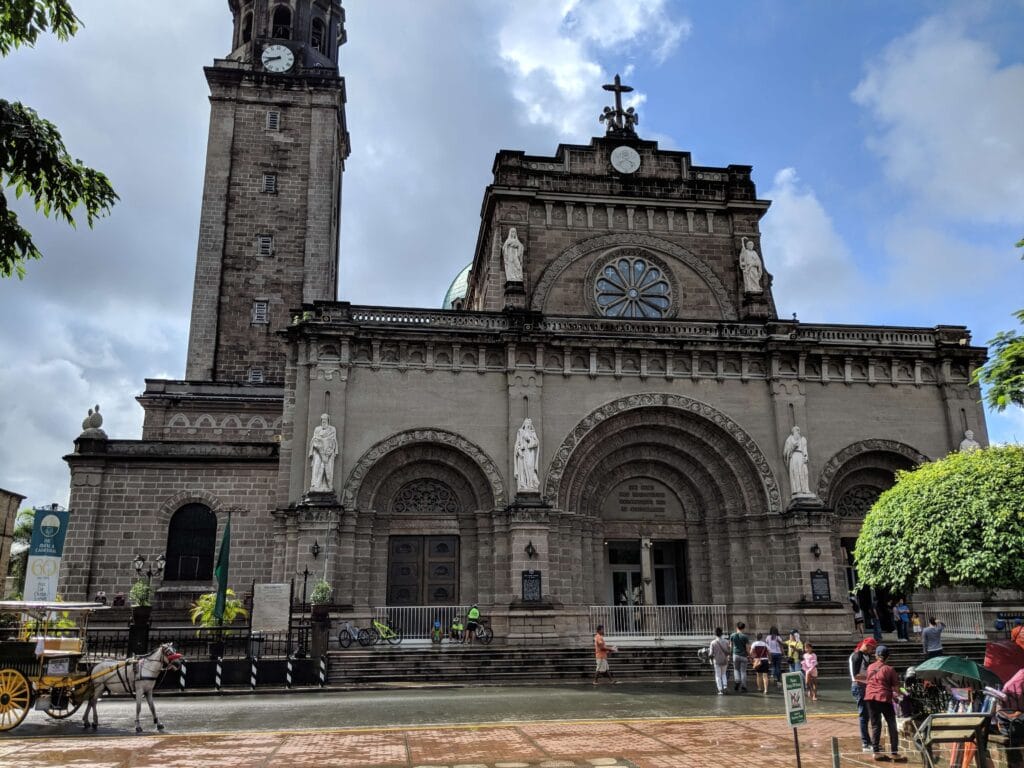
The physical landscape of 1874 Manila illustrated this dynamic with striking clarity. The Manila Cathedral, the seat of the Secular Archbishop who had defended the native priests, lay in ruins following the 1863 earthquake, its reconstruction mired in bureaucratic delays. In contrast, the Dominican church of Santo Domingo in Intramuros had been rebuilt by 1868. It stood as a majestic, Neo-Gothic testament to the order's wealth, resilience, and permanence.
Connection to the Manuscript
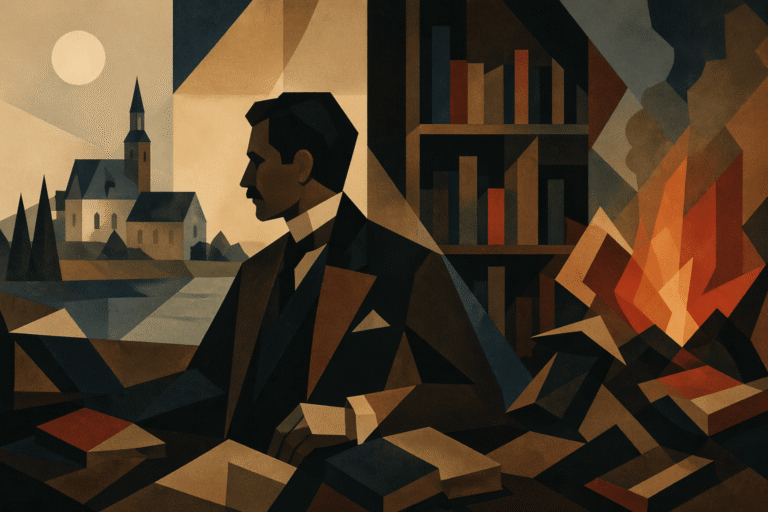
This is the invisible government encountered by Saturnino Enrich upon his arrival in Manila. In The Mariquina Manuscript, the "Frailocracy" is the primary antagonist—not necessarily through individual villainy, but through the sheer weight of its institutional power. For Saturnino to seek the truth of the Rizalino estate is to challenge a system that has spent three centuries ensuring that its secrets remain buried within the silence of the convent walls.
Author’s Note on Sources and Interpretation
The term "Frailocracy" was famously popularised by the Filipino reformist Marcelo H. del Pilar in his 1889 pamphlet La Soberanía Monacal en Filipinas. While the term carries a strong polemical weight in Philippine history, this article uses it to describe the documented administrative and economic structures of the 19th-century Spanish Philippines.
The details regarding the landholdings of the religious orders and their roles in the Comisión Permanente de Censura are drawn from colonial administrative records and the seminal works of historians such as O.D. Corpuz and John Schumacher. This archival file seeks to reflect the historical reality of the period: a society where the boundaries between religious mission and state administration had become indistinguishable, creating the unique "clamped-down" atmosphere of the 1870s.