Education of a Polyglot
(The Ghost Student and the Language of Empires)
Saturnino Ximénez presented himself to the world as a man of immense erudition—a scholar capable of debating archaeology in the ruins of Ephesus or Russian literature in the salons of St. Petersburg. However, an archival forensic analysis of his educational background reveals a recurring pattern of fabrication. The "Professor" Ximénez was largely a self-invention; a man who bypassed the lecture hall for the library of the world, yet felt compelled to curate a pedigree that matched his intellect.
The Menorcan Foundation: The Ghost in the Classroom
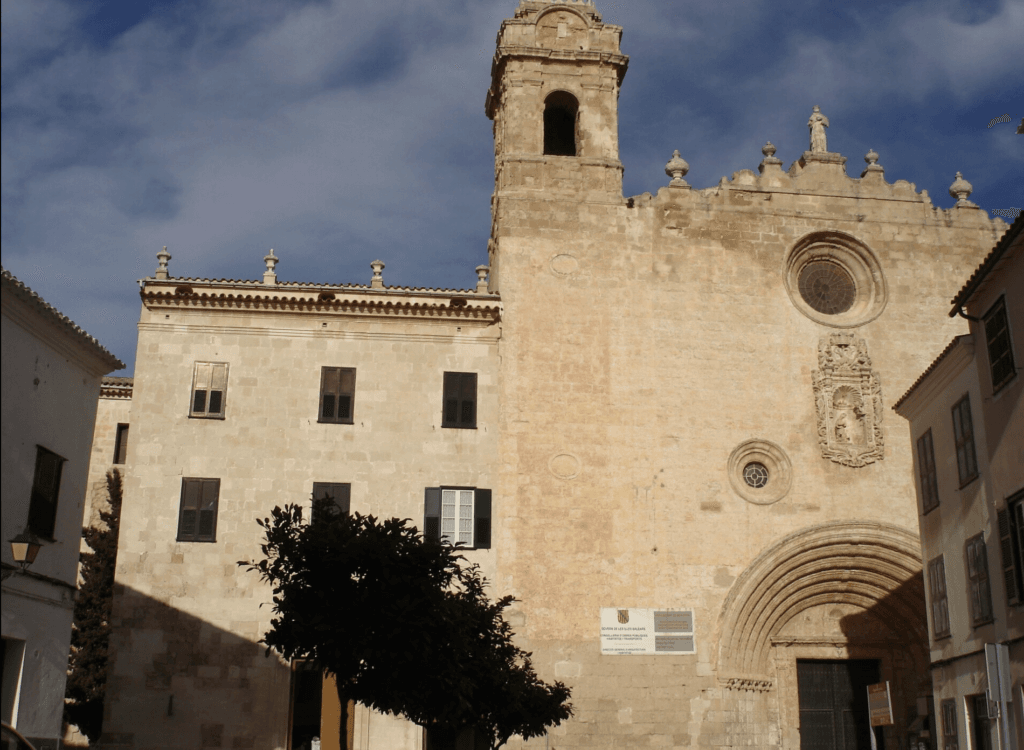
In his later correspondence, Saturnino claimed that after spending his early childhood in Barcelona, he returned to Mahón to complete his secondary education at the Institute housed in the Convento de San Francisco. He provided specific, nostalgic details: the shadow of the cloisters, his Latin professor Vicente Sastre, and the religious instruction of the Franciscan orator Father Ramón Teixidor.
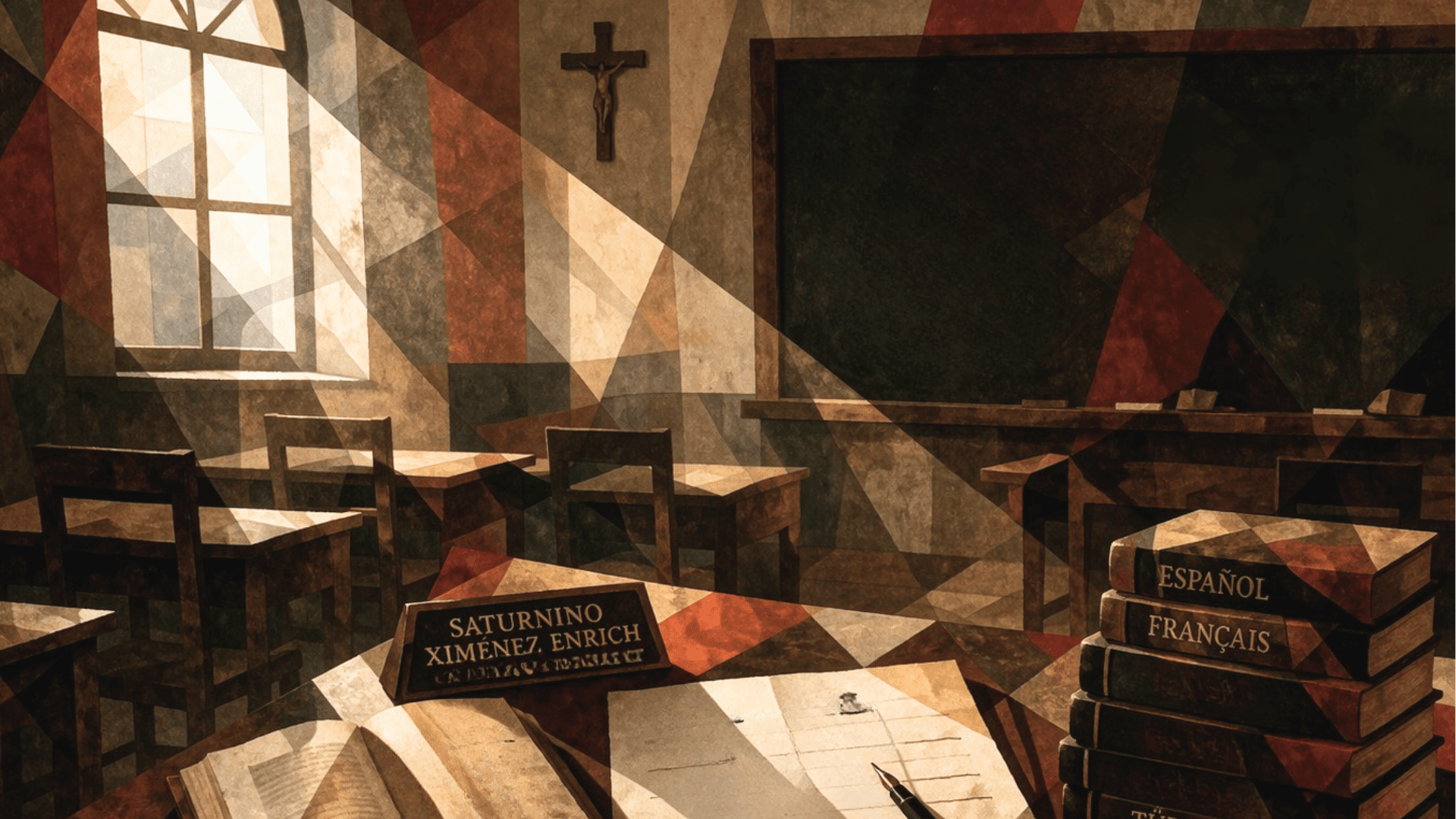
The archives, however, tell a different story. A search of the Institute’s records from 1864 to 1872 reveals a significant void. There is no student file for Saturnino Jiménez Enrich, nor does his name appear in any examination records. While he undoubtedly absorbed the intellectual atmosphere of Menorca—likely under the informal tutelage of figures like José Hospitaler—his formal enrollment appears to be a fiction. He was a Ghost Student, absorbing the curriculum without ever submitting to the bureaucracy of the gradebook.
The Invisible University Career
This pattern of unverifiable education followed him into adulthood. Ximénez frequently claimed to have studied at the Universities of Barcelona, Madrid, Paris, Berlin, and Leipzig. Yet, searches in the historical archives of the University of Barcelona have failed to produce a single matriculation record.
His connection to Leipzig is particularly illustrative of his talent for self-mythology. He claimed to have spent ten years in the city directing a magazine. The historical record shows he was indeed in Leipzig in 1882, serving as the editor for the Revista germánica de literatura, artes y ciencia. However, he only appears as editor for the first two issues. By late 1882, he was back in Madrid. The ten years were, in reality, less than a year. He had learned that in the 19th century, a well-placed lie about a German education was as good as a degree.
The True Polyglot: A Weaponized Gift
Despite the likely fraudulent diplomas, Ximénez possessed a linguistic arsenal that few university graduates could match. He did not merely speak languages; he operated within them, using them as tools for social and political infiltration.
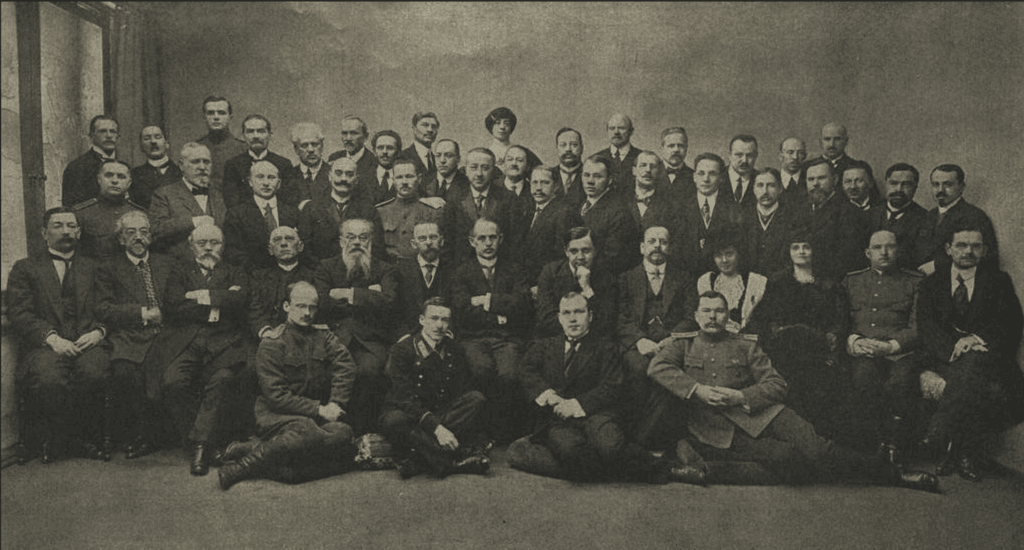
The Russian Feat: Living in Russia, he mastered the language well enough to write for the newspaper Novoye Vremya. He is credited as the first translator of Anton Chekhov into Spanish, publishing El jardín de los cerezos (The Cherry Orchard) in 1920. To translate Chekhov is to understand the soul of a language; Saturnino had mastered both.
The Sephardic Connection: During his travels in the Balkans (1877–1878), he became fascinated by the Sephardic Jews of Salonica. He recognized they spoke a Castilian "of Cervantes," and he meticulously collected a vocabulary of their archaisms and songs. He later advocated for a Sephardic Congress in Toledo—a move that was as much about geopolitical soft power as it was about linguistics.
The Ottoman Ciphers: His time in Constantinople and Greece allowed him to navigate both Greek and Turkish. He directed a French-Turkish newspaper, Le Courrier Européen, and wrote the erudite Asia Minor in Ruins based on a profound knowledge of Greek history.
The German Scandal: His proficiency in German allowed him to work for the Deutsche Kolonial Zeitung in 1885, a role that placed him at the heart of the "Affaire Giménez" diplomatic crisis.
Status Assessment
Saturnino Ximénez was a self-made intellectual in the most literal sense. Lacking the patience for the slow grind of institutional learning, he used an unusually retentive memory and voracious reading habits to construct a veneer of academic authority.
While his claims of formal degrees were fraudulent, his functional knowledge was devastatingly authentic. He was a man who could discuss the Iliad in the original Greek, negotiate arms deals in Arabic, and translate Russian theater for a Spanish audience—a practical education forged not in a classroom, but in the transit between war zones and diplomatic missions. He proved that in a world of crumbling empires, a diploma is just paper, but the ability to speak the enemy's language is power.