The Real Indiana Jones of Catalonia
Personal Archive File 000
| Subject | Born | Status at File Closure (1876) | Age |
|---|---|---|---|
| Saturnino Ramón Francisco Jiménez Enrich | March 10, 1853, Isla del Rey, Mahón (Menorca) | Journalist, Revolutionary, War Correspondent, Red Cross Chronicler | 23 |
The Prodigy & The Myth Maker
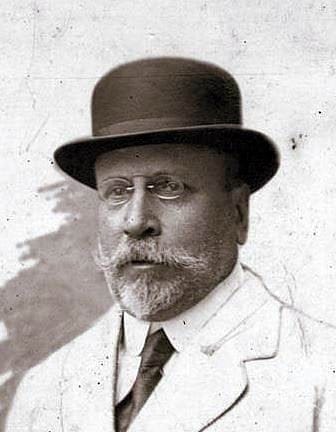
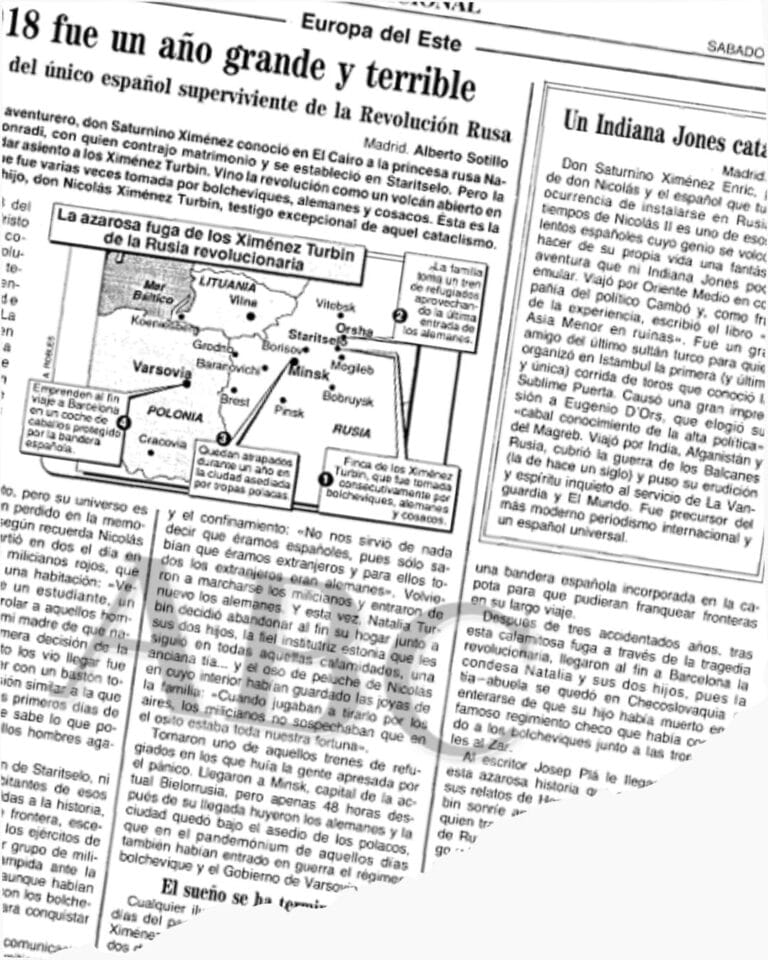
On February 2, 1992, the Spanish newspaper ABC published a profile that would forever change the legacy of a forgotten Menorcan polymath. The headline read: “Saturnino Ximénez: Un ‘Indiana Jones’ Catalán.” Written by Alberto Sotillo, the article drew a startling parallel between the whip-cracking cinematic hero and a real-life adventurer who had spent the late 19th century navigating the dangerous intersections of archaeology, war, and international espionage.
But while the "Indiana Jones" moniker serves as a convenient pop-culture hook, the reality of Saturnino Ximénez Enrich’s early life was arguably more complex—and significantly more calculated. Before he was the mysterious and sinister figure described by Catalan writer Josep Pla as having the air of a spy, Saturnino was a young man consuming life at a terrifying velocity.
More importantly, he was already a master of the "Great Blur"—the deliberate smudging of lines between fact and fiction that would define his life and, eventually, provide the DNA for The Saturnino Ximénez Files.
The Boy from the Island of Mercy
Saturnino’s story begins in a place defined by both discipline and trauma. He was born in 1853 on the Isla del Rey (King’s Island), a small outcrop in the port of Mahón, Menorca. His father, Francisco Jiménez, served as the Director of the Military Hospital there—a sprawling complex that functioned as a sanctuary for the wounded and the dying across the Mediterranean.
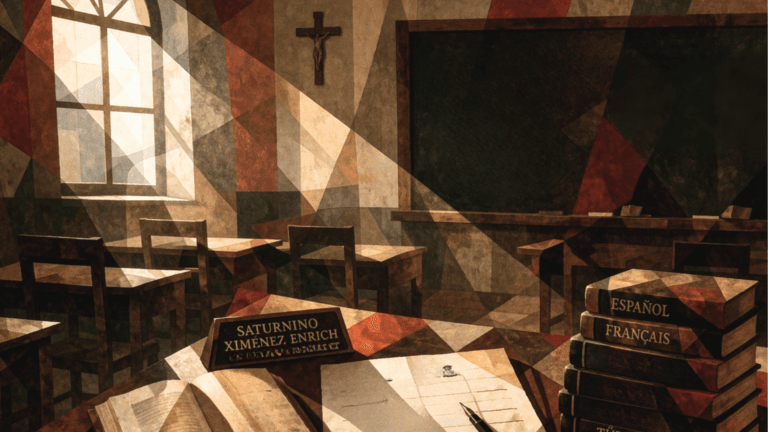
Raised on this "Island of Mercy," Saturnino was steeped in an environment of medicine, military order, and the constant transit of global travelers. However, the Myth Maker persona began early. Saturnino would later claim to have studied at the most prestigious institutions in Barcelona, Madrid, and even Leipzig and Paris. Yet, as his biographers have noted, he notoriously disdained formal diplomas. He was a polyglot who mastered languages with a chameleon-like ease, but he preferred the education of the archive, the street, and the war theatre over the lecture hall. This was the first of his many "curated truths"—the image of a high-intellect scholar who operated entirely outside the traditional establishment.
The Radical and the "José" Identity (Age 20)
By 1873, Spain was a powder keg. The First Spanish Republic was crumbling, and a twenty-year-old Saturnino threw himself into the center of the blast. Writing under the pseudonym "Juan de Niza" for the Madrid newspaper La Gaceta Popular, he emerged not as a mere observer, but as a radical participant in the Cantonalist insurrection in Cartagena.
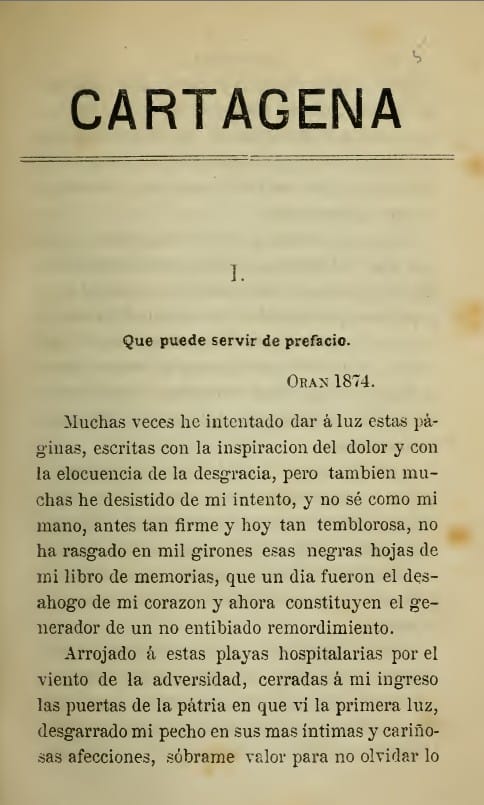
It is here that we see the first true evidence of Saturnino as a Myth Maker. When he published his memoir, Cartagena (Recuerdos Cantonales), he did not present it as a straightforward autobiography. Instead, he told the story of the siege through the eyes of a fictional mechanic named "José," an employee at the city arsenal.
This was a sophisticated tactical move: by reporting the brutal truth of the bombardment through a fictional proxy, Saturnino could inhabit the grit of the rebellion while maintaining the plausible deniability of a narrator. He had learned early that in a world of shifting political allegiances, the safest way to tell the truth was to call it a story.
The Exile: Romantic Myth vs. Hard Reality (Age 21)
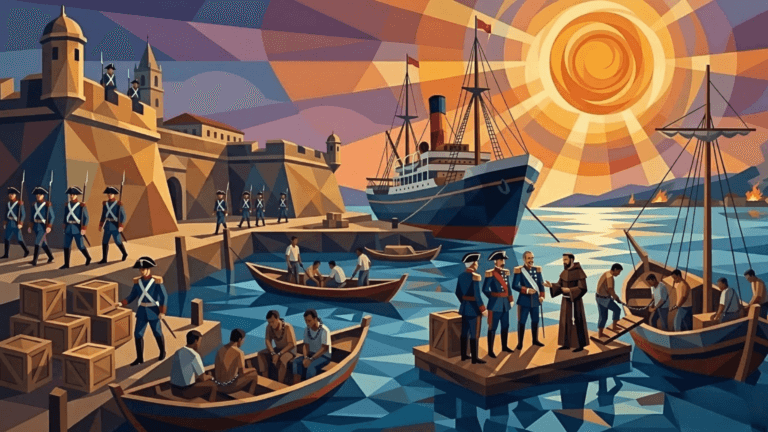
When the Canton of Cartagena collapsed in January 1874, the historical record tells of a romantic and tragic flight. Along with over a thousand other Cantonalist insurgents, Saturnino boarded the ironclad steamship Numancia to escape execution. They fled across the Mediterranean to Oran, Algeria, where French colonial authorities stripped them of their arms and identities and interned them in squalid camps.
However, modern deconstructions of Saturnino’s life suggest that this "exile" may have been another example of his talent for self-mythologizing. While his fictional counterpart in the short story The Oran Ultimatum suffers the physical squalor of the camps, historical evidence shows the real Saturnino was remarkably active in Barcelona during portions of his supposed exile.
He was already directing the publication La Neutralidad and compiling the Anales de la Cruz Roja (Annals of the Red Cross) in 1874. Whether he was a fugitive in North Africa or a strategic operative in Spain, he used the narrative of the exile to build a profile of a persecuted intellectual—a "dangerous" man of conscience.
The War Correspondent (Age 22–23)
By 1875, Saturnino had perfected the art of the "Embedded Observer." He headed for the front lines of the Third Carlist War (1872–1876), working as a correspondent for La Crónica de Cataluña.
He walked the fine line between the liberal government and the traditionalist Carlist forces, moving through the blood-stained war zones of the Basque Country and Navarre with a notebook that acted as both a weapon and a shield. His output during this period—including Secretos e intimidades del campo carlista (1876)—offered a humanized view of the insurgents. He had discovered that the most powerful person in a war wasn't the man with the rifle, but the man who controlled the story of the rifle.
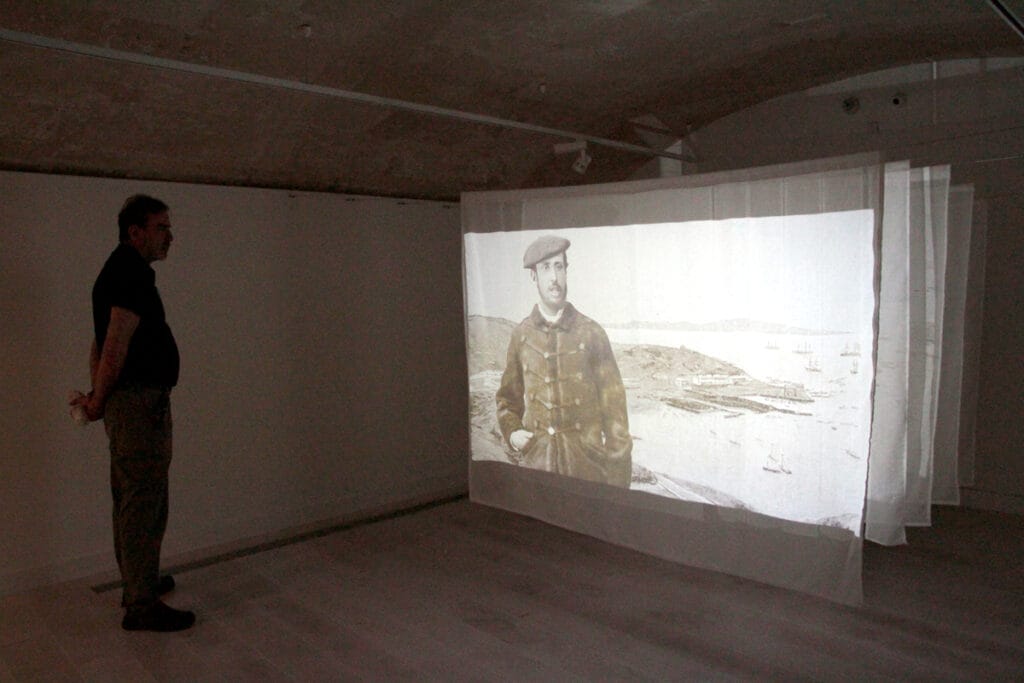
Status Assessment: 1876
At twenty-three years old, Saturnino Ximénez Enrich is a veteran of two wars and a political exile (real or curated). He is a published author of history, a polyglot with no diplomas, and a man who has already learned to report the hardest truths of his age through the carefully constructed mask of a fictional mechanic.
He has mastered the art of survival through ambiguity. But for a man with his appetite for the unknown, the borders of Spain are beginning to feel like a cage. He has tasted the North African coast and decoded the ciphers of the Spanish civil wars. Now, as the dust of the Carlist conflict settles, the young correspondent is looking toward the Orient—toward empires much older, more mysterious, and infinitely more dangerous than his own.