Born on an Island of Mercy
The Military Origins of Saturnino Ximénez.
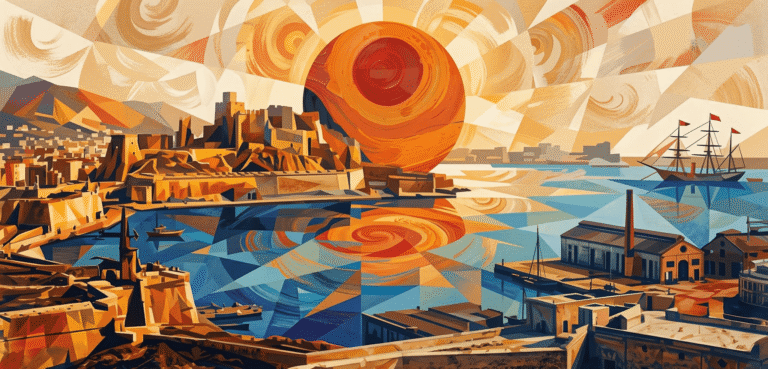
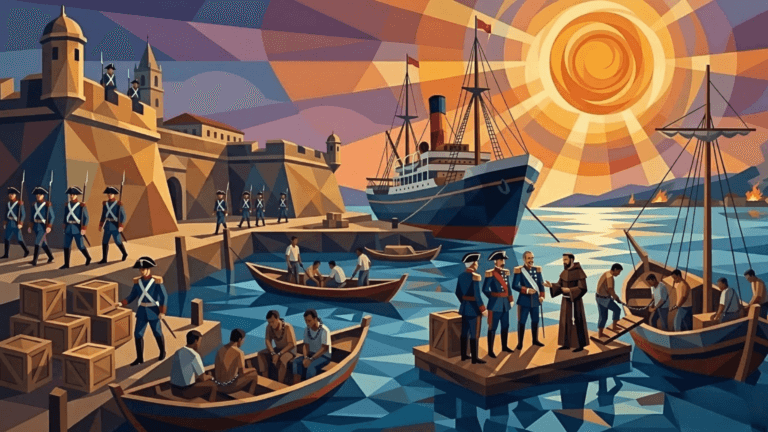
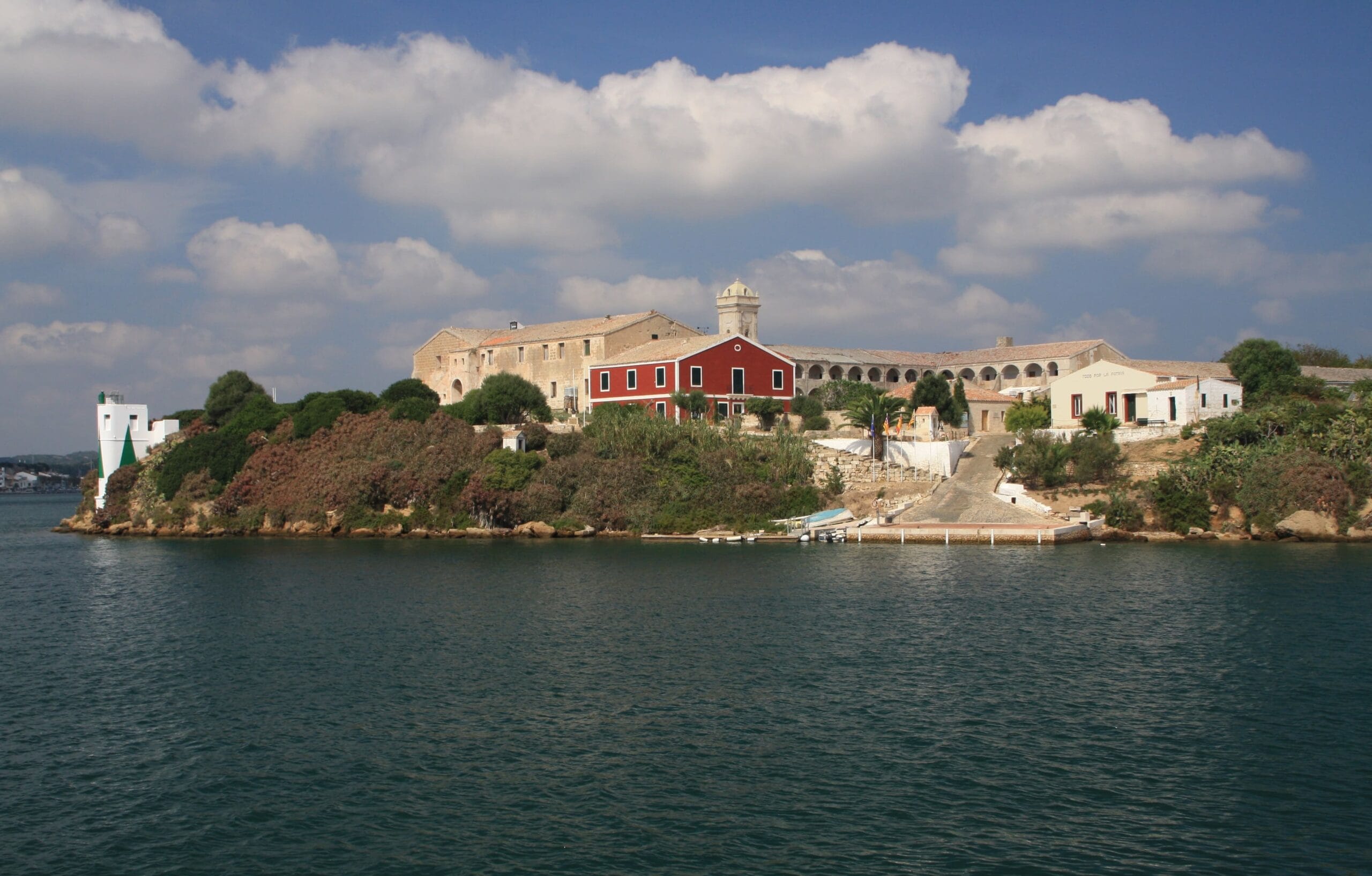
Before Saturnino Ximénez was a spy, a revolutionary, or an archaeologist, he was a child of the military establishment. His life did not begin in a traditional home, but within the walls of a limestone fortress designed for the dual purposes of war and healing. He was born on the Isla del Rey, a small, wind-swept islet sitting in the geometric center of the strategic port of Mahón.
This island housed the Military Hospital—a massive, high-discipline institution that served the Spanish fleet and international sailors alike. This isolated, regimented environment would imprint upon the young Saturnino a lifelong fascination with military logistics, medicine, and the transient, porous nature of borders.
The Vital Records
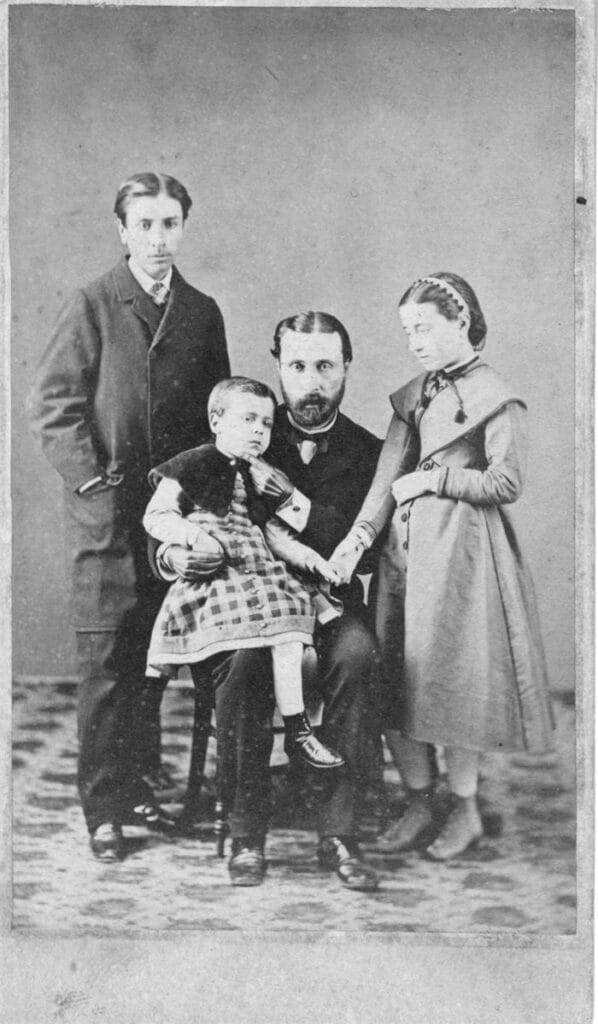
For the historical detective, the entry point into Saturnino’s life is found in the Civil Registry of Mahón (Book 4 of Births). The records state that Saturnino came into the world at seven o'clock in the morning on March 10, 1853. He was baptized two days later at the Parroquia de Santa María, the architectural heart of Mahón.
His lineage was a blend of Catalan and Menorcan—a duality that would define his later political adaptability. His father, Francisco Jiménez, was a native of Barcelona, representing the industrial and political ambitions of the mainland. His mother, Teresa Enrich, was a local Menorcan from the Pellicer family, with deep roots in Alayor. This Double Identity allowed Saturnino to move between the corridors of power in Madrid and the maritime cultures of the Mediterranean with equal ease.
The Discrepancy of the Father: Administrator or Physician?
From his very first breath, Saturnino’s life is marked by a tension between official records and his own carefully curated narrative. In his later correspondence and the memoirs he influenced, Saturnino often referred to his father as the "Administrator" of the Military Hospital—a title that implies a bureaucratic, logistical role.
However, the birth certificate explicitly lists Francisco Jiménez as the "Director" of the hospital. In the 19th-century Spanish military hierarchy, the "Director" was typically a high-ranking military physician.
This distinction is not merely semantic; it is the key to understanding Saturnino’s intellectual weaponry. If his father was indeed a physician-director, it explains Saturnino’s precocious technical knowledge of sanitary trains, field ambulances, and military hygiene—knowledge he would later display with professional authority in his work, Anales de la Cruz Roja (1874). He did not merely stumble into the world of humanitarian aid; he was raised in its engine room, surrounded by the wreckage of the Crimean and Carlist conflicts.
Ink in the Blood: The Press as a Family Trade
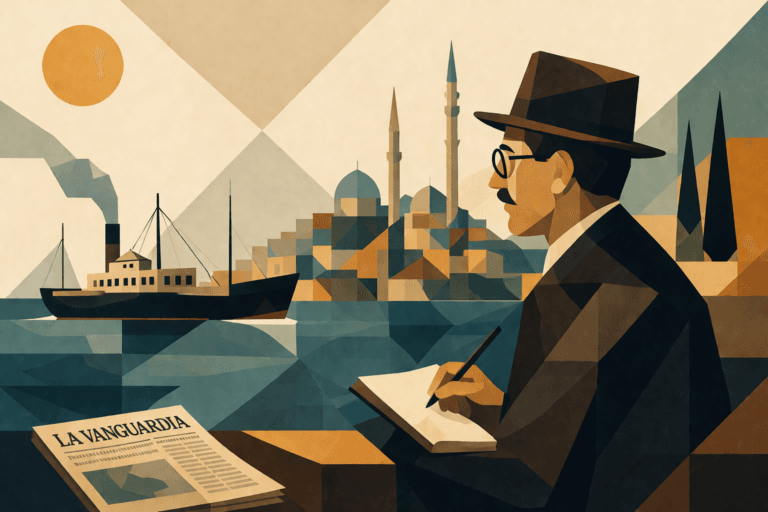
While the hospital provided the Medicine pillar of his career, his father also provided the Media pillar. Francisco Jiménez was a pioneer of the Balearic press. He founded and directed El Eco de Menorca (1855–1858) and the Hoja Autógrafa Menorquina. Saturnino later claimed this was the first daily newspaper to appear in Mahón, printed on a lithograph machine that Francisco had mounted himself in the family home.
The young Saturnino spent his earliest years watching his father navigate the worlds of military administration by day and public opinion by night. By the time the family moved to Barcelona around 1859, the six-year-old Saturnino had already been exposed to the two forces that would dominate his adult life: the authority of the Army and the power of the Printing Press.
The Ghost Student: Myth vs. Archive
As Saturnino reached adolescence, the "Myth Maker" began to take control of the story. He later claimed to have returned to Mahón to complete his secondary education at the Institute housed in the Convento de San Francisco. He spoke with erudite fondness of his Latin professor, Vicente Sastre, and the religious education he received under the Franciscan orator Father Ramón Teixidor.
However, modern investigations into the Institute’s archives reveal a significant void. There is no student file for a Saturnino Jiménez Enrich, and his name is conspicuously absent from the examination records between 1864 and 1872.
Whether this is due to lost records or Saturnino’s tendency to "enrich" his own biography remains an open question. What is certain is that by his early twenties, he would disdain formal diplomas entirely, famously stating that the only true university was the battlefield and the library. He was a self-made intellectual who used the appearance of a formal education to gain access to the diplomatic and academic circles he would later infiltrate.
Status Assessment (1853–1868)
Saturnino Ximénez Enrich enters history born on a literal island within an island, separated from the civilian world by water and military rank. He is the son of a man who managed both the physical wreckage of war (the hospital) and the flow of information (the newspaper).
These dual legacies—medicine and media—armed him with a unique set of skills. As the 1860s come to a close and Spain prepares for the "Glorious Revolution," the boy from the Island of Mercy is no longer a child. He is a polyglot, a skeptic, and an operative in waiting.