The Cantonal Rebellion
The Real Chaos of 1873
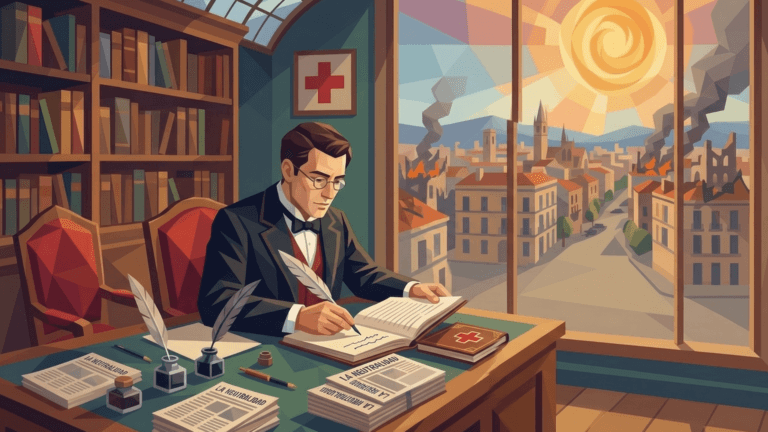
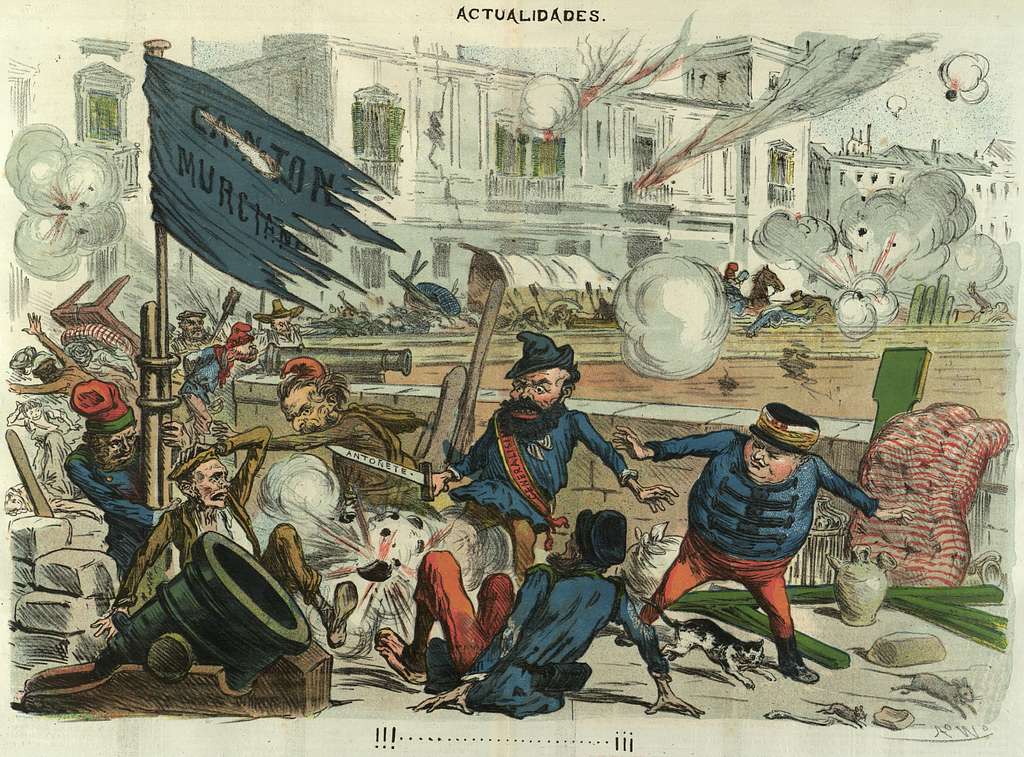
To the outside world, the Cantonal Rebellion of 1873 was a political absurdity; to those trapped within the walls of Cartagena, it was a descent from euphoric idealism into a "Hell of Dante." Saturnino Ximénez, then a fervent federal republican in his twenties, chronicled this collapse in his 1875 work, Cartagena (Recuerdos Cantonales). Writing under the alter-ego of a mechanic named José, Ximénez captured the surreal atmosphere of a city that declared war on Madrid, minted its own money, and ultimately disintegrated under a rain of 1,200 shells a day.
The Delirium of July: "We Have a Canton!"
The rebellion began not with a battle, but with a signal. At 4:00 a.m. on 12 July 1873, a cannon shot from the Galeras fortress announced that federalist conspirators had seized control. The Junta de Salvación Pública (Junta of Public Salvation) was formed, and the red flag—actually a Turkish flag stained with blood in a fit of improvisation to hide the crescent—was hoisted over the city.
Ximénez describes the initial atmosphere as one of algarabía (clamour). The revolutionaries believed they were fulfilling the "sacred promise" of the Federal Republic from the bottom up. Such was their confidence that they immediately telegraphed their manifesto to the President of the United States and the New York Herald, convinced that the "funds in the Paris Bourse" would rise upon the news.
The "Kings" of the Canton
The rebellion was led by a motley crew of "intransigent" republicans whom Ximénez depicts with a mixture of sympathy and biting sarcasm:
- "Antoñete" (Antonio Gálvez): A rural leader described as a "hero" by the cantonal press, but whom Ximénez notes had the "heart of a child" and preferred being deceived to causing catastrophe.
- General Juan Contreras: The military leader who assumed command of the city and the fleet. Ximénez portrays him as honourable but overwhelmed by the "charlatans" surrounding him.
- The "Engineers": In a desperate bid for manpower, the Junta released 1,500 inmates from the local presidio (penal colony). These men, many serving time for forgery or murder, were given red berets, rifles, and the title of "Engineers" to encourage their loyalty.
The Independent State: Pirates and Silver
For six months, Cartagena operated as an independent city-state. When the central government in Madrid attempted to strangle the rebellion financially, the Canton minted its own currency. Using silver from the mines of Mazarrón, they produced the "Duro Cantonal" (Cantonal Dollar).
Ironically, as noted by both Ximénez and the novelist Benito Pérez Galdós, these coins had a higher silver content than the official currency of Madrid. They were minted by the "good boys" of the prison—counterfeiters who wanted to prove their skill to their new masters.
However, survival required food. The rebel fleet, including the ironclads Vitoria and Numancia, launched expeditions to neighbouring coastal towns to "collect contributions." This led Madrid to declare the Cantonal fleet "pirates." When British and German navies intervened, seizing rebel ships and escorting them to Gibraltar, Ximénez lamented the "supreme outrage" to Spanish dignity.
The "Hell of Dante": The Bombardment
By November 1873, the euphoria had vanished. The centralist troops laid siege to the city, and the bombardment became relentless. Ximénez chronicles the transition from political experiment to slaughterhouse:
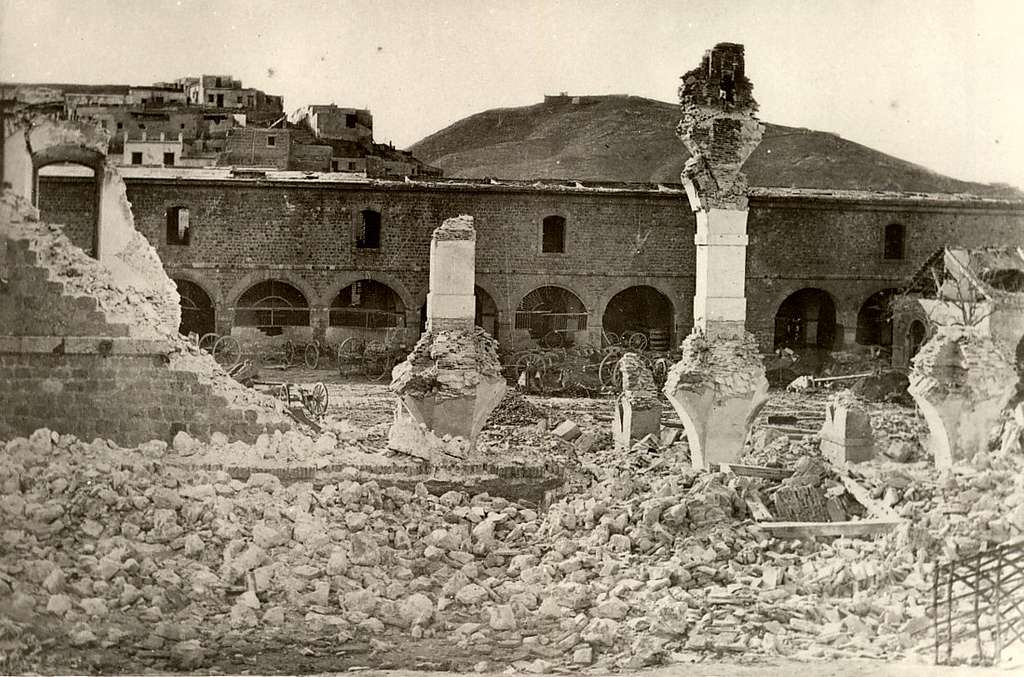
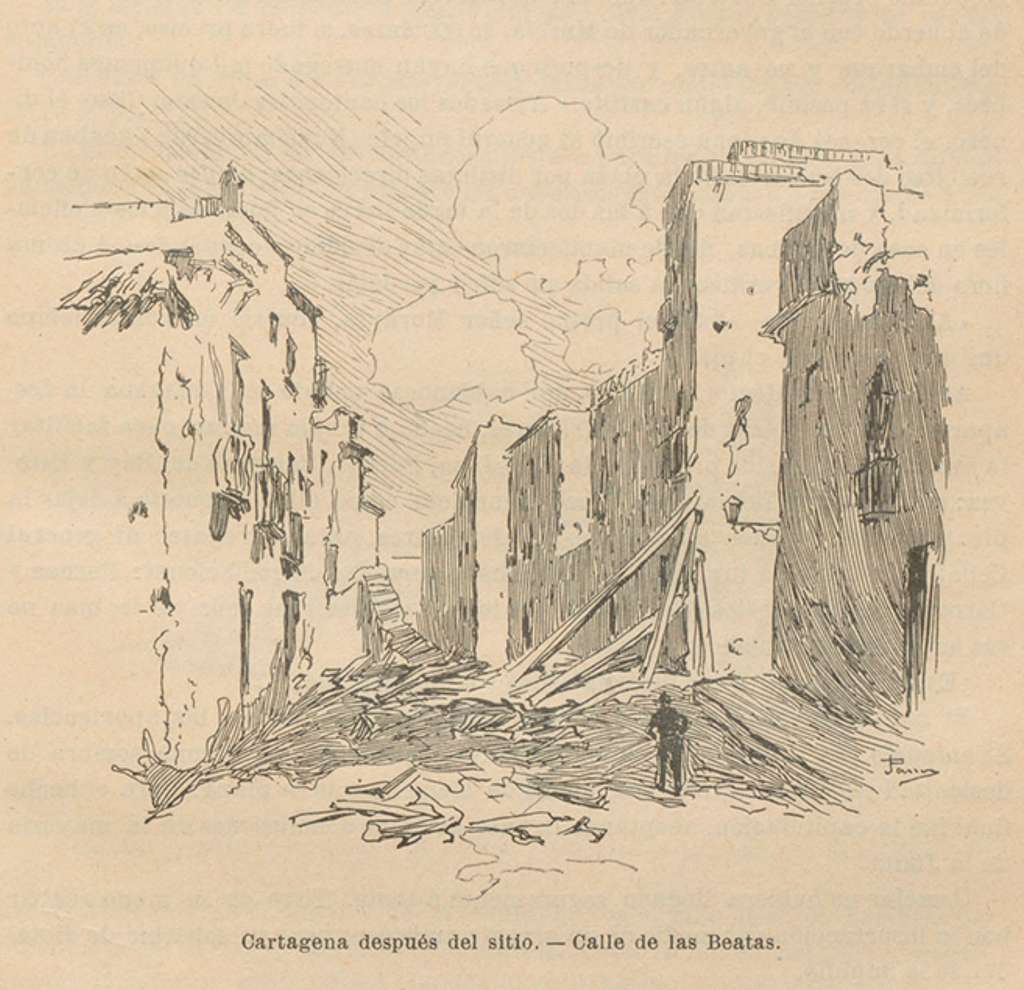
- The Destruction: The city was subjected to an average of 1,200 projectiles daily. Ximénez describes the panic as "voracious terror," with families seeking refuge in the vaults of the Artillery Park or the Cathedral.
- The Tragedy of 6 January: The turning point was the explosion of the Artillery Park. A shell struck the depot where hundreds of women and children were sheltering. Ximénez describes the aftermath: a "shuddering protest of foundations failing" and a silence "obliterated" by a deafening crash.
The Flight of the Numancia
By 11 January 1874, the situation was untenable. The leadership, facing certain execution, decided to flee. In a dramatic finale on the evening of 12 January, the Junta boarded the frigate Numancia. As centralist troops entered the city gates, the pride of the Spanish navy slipped out of the harbour, carrying over 2,500 refugees—including, allegedly, Ximénez himself.
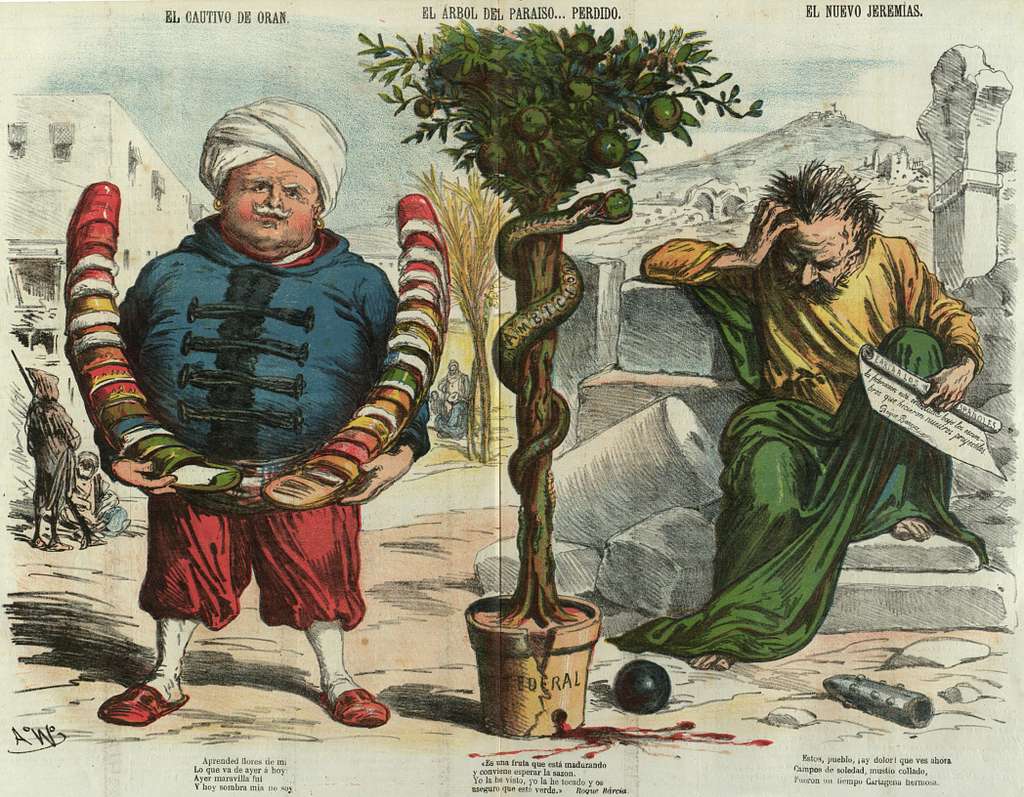
They broke the blockade and steamed toward Oran, Algeria. Ximénez describes the arrival in French waters on 13 January 1874 as the end of the dream. The French authorities disarmed them, interning the leaders in fortresses while the refugees were left to drift in a "purgatory" of mud and despair.
Truth or Fiction?
While Ximénez presents Cartagena as a diary written "on the day," modern historians debate its total veracity. Some suggest he may have reconstructed parts of the narrative or visited Cartagena later to interview survivors like Antonio Bonmatí of the Red Cross. Regardless of the precise timeline of his presence, his work remains the definitive emotional history of the rebellion—a testament to a time when a city declared war on a nation, minted its own silver, and ended in a pile of rubble and a boat ride to exile.