
The Red Cross Chronicler
Saturnino’s First War for Civilization
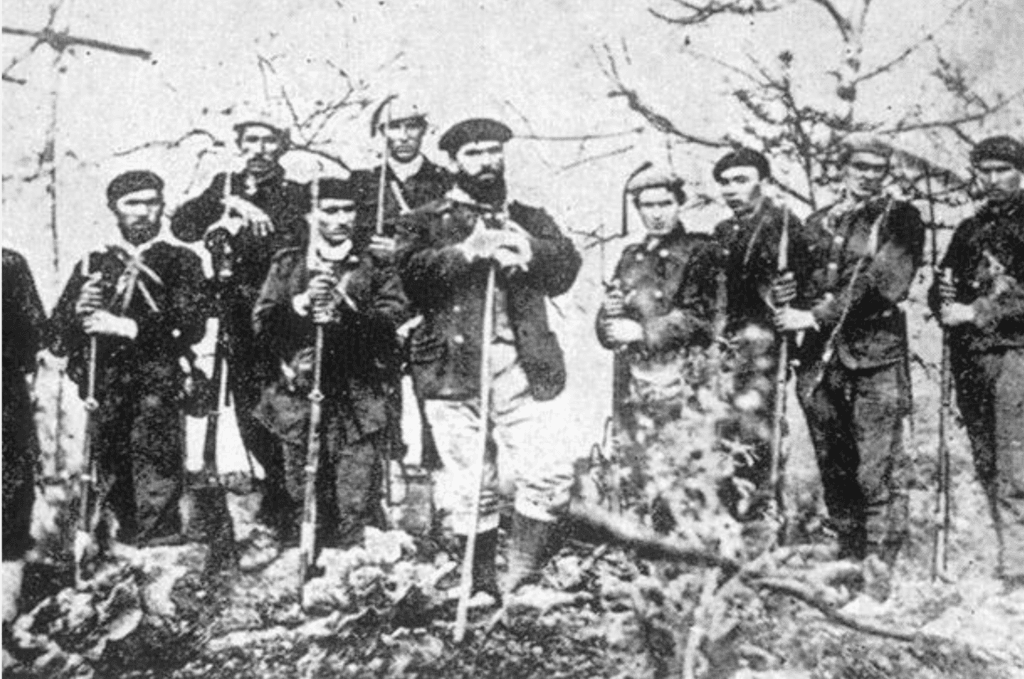
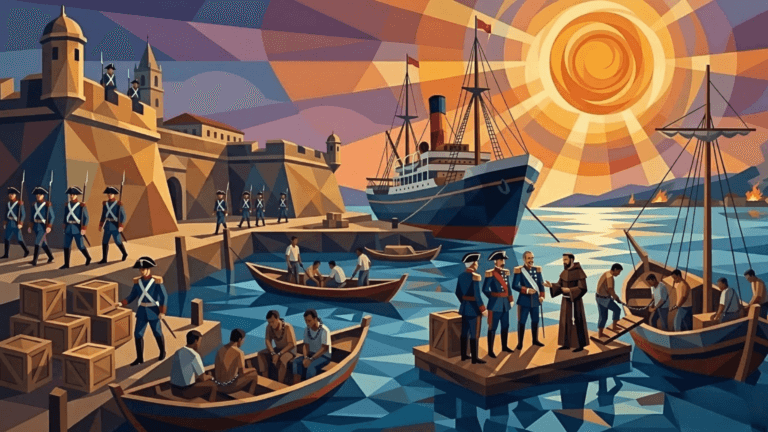
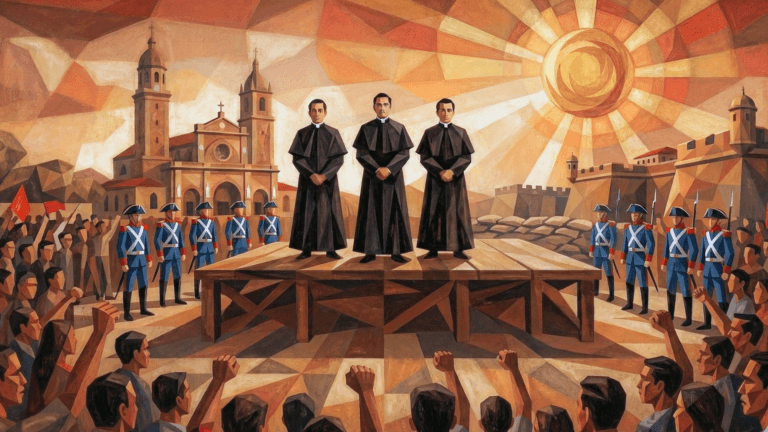
While most young men of his generation were being conscripted to fight in the trenches of the Third Carlist War, the twenty-one-year-old Saturnino Ximénez was fighting a different kind of battle: a war for the "civilization" of conflict itself.
Between 1874 and 1876, Saturnino emerged as the primary intellectual architect of the "humanitarian imaginary" in Spain. His mission was to defend a new, suspicious foreign entity—the Red Cross—against a society deeply fractured by religious and political hatred.
The Prodigy Chronicler
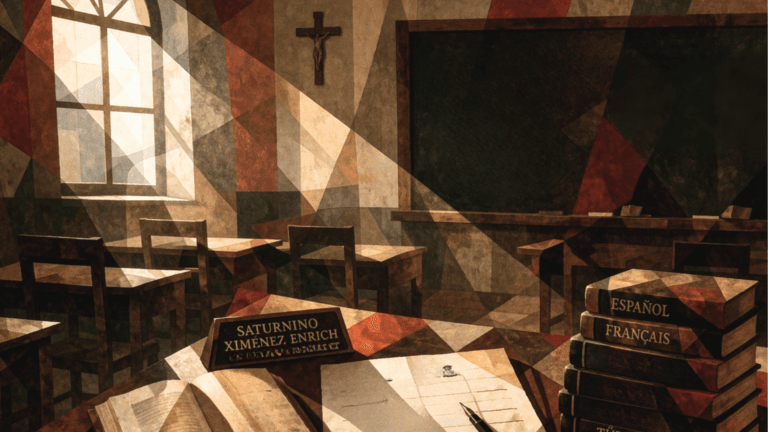
In 1874, amidst the smoking ruins of the Cantonalist suppression and the surge of the Carlist uprising, the Supreme Assembly of the Spanish Red Cross awarded a prestigious prize to a monumental work: Anales de la Cruz Roja. The author was a young man who had barely left his teenage years.
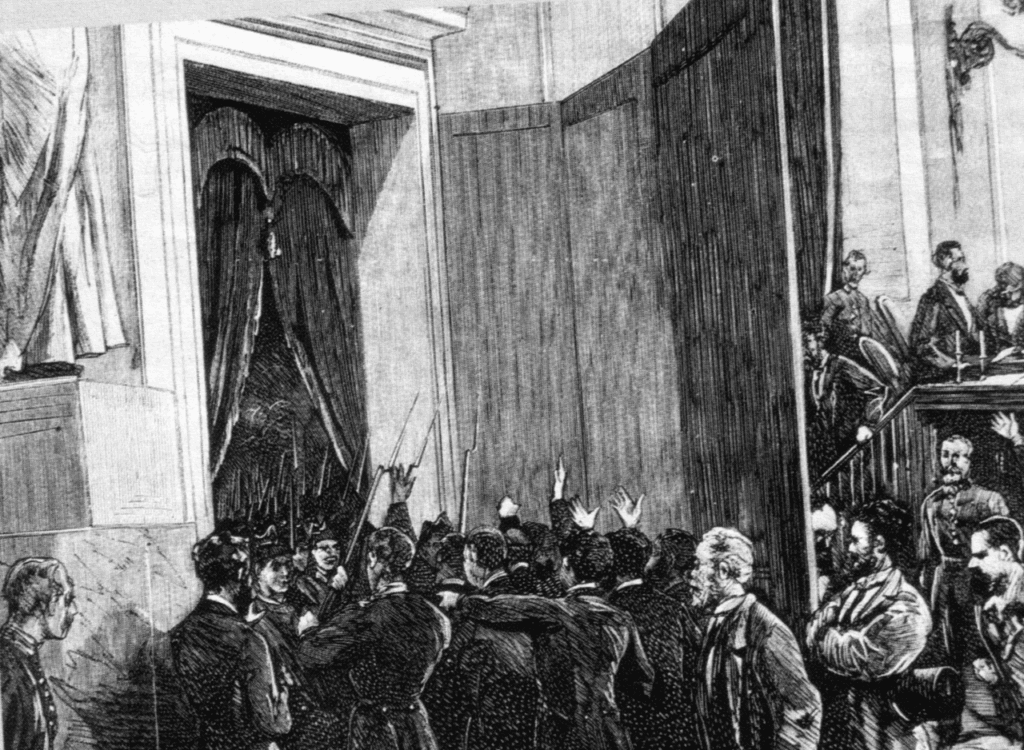
This was no mere pamphlet. It was a massive, "splendidly" illustrated quarto volume of 800 pages, detailing the history of modern warfare from the perspective of charity. It cataloged the origins of the Geneva Convention, the organization’s early martyrs, and the technical details of battlefield aid. The work effectively made him the first official historian of humanitarianism in Spain, earning him the title of "Chronicler of the Association." For Saturnino, the Red Cross was a vehicle for his own social ascent and a tool for the "modernization" of Spanish warfare.
The Battle for La Neutralidad
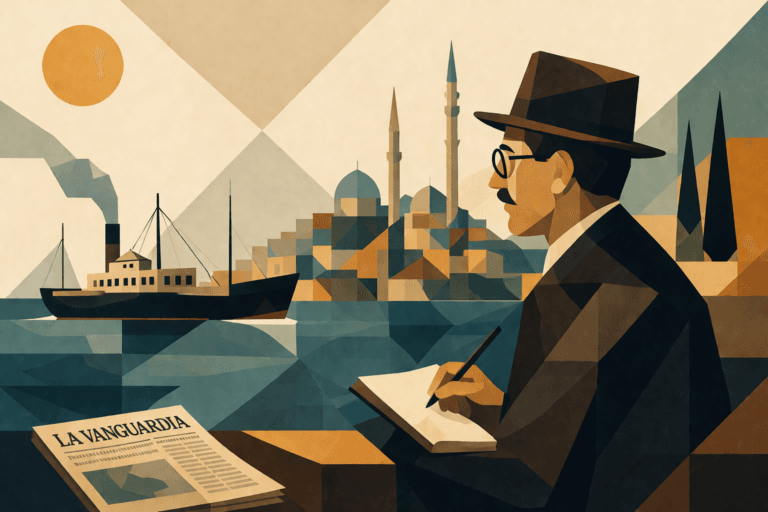
Saturnino’s war was fought with ink. In late 1874, he was appointed director of La Neutralidad, the official bulletin of the Red Cross sections in Barcelona. His mission was defensive. In 1870s Spain, the Red Cross was viewed with profound suspicion. Traditionalist sectors regarded it as a "Masonic" or "Protestant" intrusion due to its Swiss origins.
Through his editorials, Saturnino fought to "nationalize" the concept of mercy. He argued that the Red Cross was not a religious sect, but a universal banner of "fraternity" that protected all combatants regardless of their flag. He spent months refuting attacks from clerical publications like El Consultor de los Párrocos, which accused the organization of dangerous demagoguery. He was learning to use the language of neutrality as a suit of armor—a skill he would later master in the shadow of imperial courts.
The "Exile" Paradox: A Crack in the Biography
This period reveals a significant discrepancy in the traditional Saturnino biography. Standard historical narratives claim he was in political exile in Oran, Algeria, throughout 1874 following the Cantonalist disaster in Cartagena.
However, the archives tell a different story. The masthead of La Neutralidad for October and November 1874 explicitly lists "D. Saturnino Giménez" as its Director and Contador (Accountant), residing at Calle del Hospital, 36, Barcelona.
This confirms the hypothesis found in the Oran Ultimatum dossier: his "exile" was likely a brief flight or a "romantic misinterpretation" that allowed him to burnish his credentials as a persecuted radical while actually operating in plain sight. By late 1874, Saturnino was not languishing in a refugee camp; he was fully integrated into the Barcelona bourgeoisie, running a magazine and organizing hospital raffles to fund the war effort.
The Technocrat of Mercy
Saturnino’s chronicles went beyond sentimentality; they were sharply technical critiques of Spanish infrastructure. He was obsessed with the modernization of slaughter. In his later work, Memorias de la pacificación (1877), he lamented the primitive state of the Spanish Military Health Corps.
He described, with visible fury, seeing a "sanitary train" in Vitoria—converted freight wagons with suspended stretchers—that arrived too late to be of any use. He contrasted this negligence with the efficient systems of the Franco-Prussian War, asking why Spain was so "stingy in humanity while lavish in superfluous luxuries."
Remarkably, his commitment to neutrality often led him to praise the enemy. He wrote admiringly of “La Caridad”, the Carlist equivalent of the Red Cross founded by Queen Margarita. He noted that the Carlist ambulances were "magnificent" and utilized modern suspension systems adopted by "all civilized nations except ours." In Saturnino’s eyes, a well-built ambulance was more important than the political cause it served.
Status Assessment: 1876
By 1876, Saturnino Ximénez had successfully constructed a dual identity. To the public, he was the voice of the Red Cross—a neutral observer preaching "civilization" amidst the barbarity of civil war. To the authorities, he was a useful propagandist who could navigate the complex politics of the Restoration.
He had learned that information was as valuable as ammunition. As the war ended, he pivoted from chronicling the suffering of soldiers to celebrating the triumph of the new King Alfonso XII. He had proven that his true allegiance was not to a flag, but to the narrative power of the press and the art of survival.