The Politics of the Barong
To step off a steamship into the port of Manila in 1874 was to hit a physical wall of oppressive tropical heat and humidity. For a newly arrived Peninsular—a Spaniard born in the Iberian Peninsula—surviving this climate immediately collided with a far more rigid reality: the architecture of the Spanish colonial social hierarchy. In nineteenth-century Manila, clothing was far from a trivial matter of personal comfort or preference. It functioned as a potent, heavily scrutinized visual marker of identity, class, ethnicity, and political affiliation. A man’s shirt, or a woman’s skirt, did not merely cover the body; it broadcast exactly where they belonged in the "Pearl of the Orient."
The European Imperative
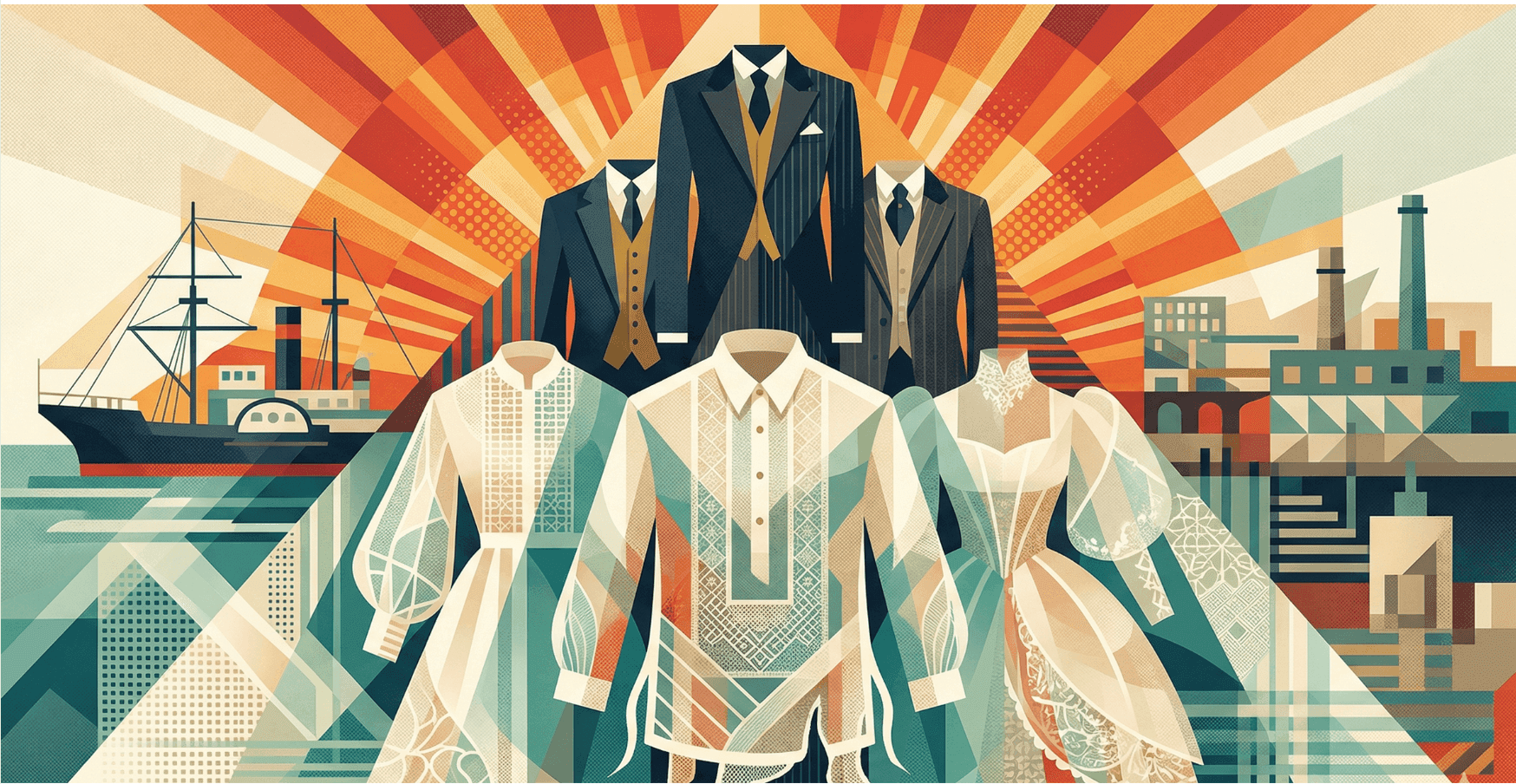
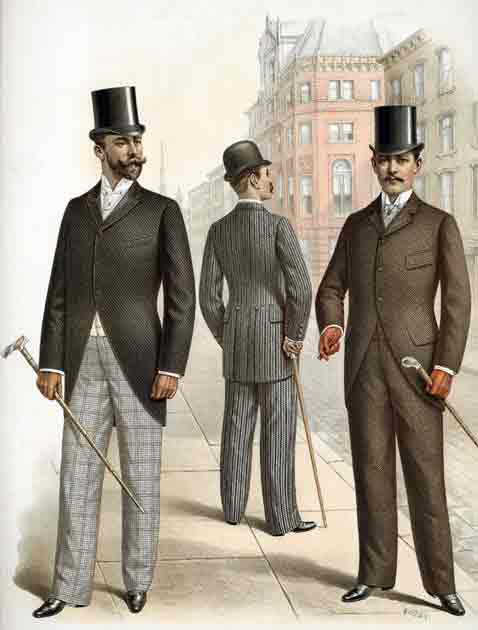
For the Peninsular, who occupied the absolute apex of the colonial pyramid, maintaining a visual connection to the metropole was a non-negotiable imperative. Social convention and colonial power dynamics demanded that they project their elevated status by adhering closely to contemporary European fashion. A European gentleman attending a formal dinner party or navigating the commercial hub of Calle de la Escolta was expected to wear a tailored suit, typically a knee-length frock coat or double-breasted "Prince Albert" coat.
Because thick European wool was agonizing in the Manila heat, these suits were carefully adapted. Expatriates and officials commissioned the few European tailors in the city, or skilled local sastres in Binondo, to recreate these formal silhouettes using imported light wool, breathable linen, or fine cotton.
The Boundary of Piña and Jusi
Yet, the Peninsular had to be careful not to adapt too much. The Philippines boasted exquisite, lightweight indigenous textiles like piña (woven from pineapple leaf fibers) and jusi (woven from abaca), which were highly prized and even exported to European aristocracy. However, because these sheer fabrics were inextricably linked to traditional Filipino attire, a status-conscious Spaniard would strategically avoid wearing them as primary formal garments. Donning a suit made of piña risked blurring the carefully constructed visual boundary between the colonizer and the colonized—a dangerous proposition in a city still simmering with paranoia following the 1872 Cavite Mutiny.
The Politics of the Untucked Shirt
This visual boundary was most brutally enforced through the politics of the shirt. For the native Filipino (Indio) and the rising Chinese-Filipino Mestizo class, the standard garment was the baro, which would later become known as the Barong Tagalog. Crafted from the aforementioned piña or jusi, it was perfectly suited to the sweltering environment.
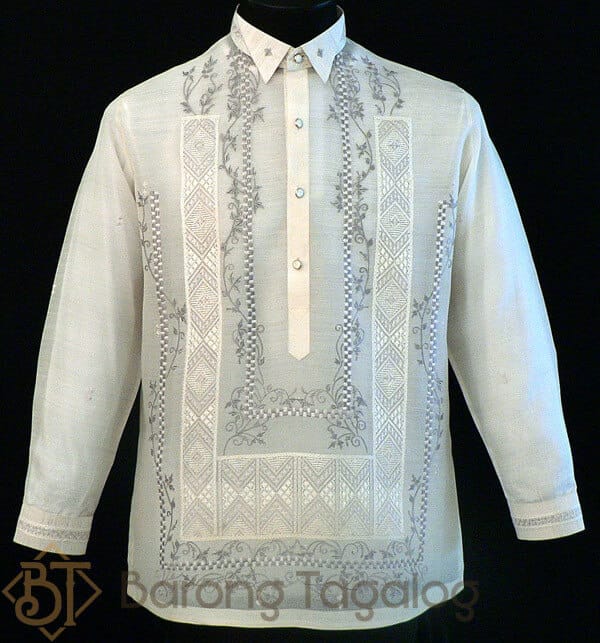
But the way it was worn was entirely dictated by colonial law. The privilege of tucking a shirt into one's trousers was legally reserved exclusively for Spaniards—both the Peninsulares and the Philippine-born Insulares. Native Filipino men were forced to wear their sheer shirts untucked. This was a deliberate, highly visible demarcation of their subordinate, colonized status. The untucked baro ensured that in any public space, a glance was all it took to differentiate the ruled from the rulers. Interestingly, as the century progressed, many of the educated Filipino Ilustrado class deliberately adopted the Western tailored suit while in Europe to symbolically assert their equality with their colonizers.
The Traje de Mestiza
Women’s fashion navigated this complex social and racial web with equal nuance. The women of the Insular and Mestiza elite developed a striking sartorial compromise: the Traje de Mestiza, also known as the Maria Clara gown. This ensemble brilliantly fused European silhouettes with indigenous craftsmanship.
The upper half featured a camisa—a sheer blouse woven from luxurious piña or jusi, featuring the wide bell sleeves popular in the 1860s and 1870s, and adorned with meticulous calado embroidery. Because the camisa was so sheer, modesty was preserved by draping a matching, stiffly starched square kerchief called a pañuelo over the shoulders. The lower half was a voluminous, floor-length saya (skirt) that mirrored Western bell-shaped trends, often made of heavy imported silks from China. Traditionally, an opaque rectangular overskirt called a tapis was wrapped around the waist. However, in a subtle rebellion of status, upper-class mestizas often omitted the tapis altogether, wearing a saya suelta specifically to flaunt the expensive fabric of their full skirt.
Utility and Authority
Further down the social ladder, laborers and dockworkers on the Pasig River prioritized pure utility, typically wearing a camisa de chino—a simple, collarless cotton shirt with Chinese origins. Meanwhile, the powerful friars who effectively ran the colony's parishes visually projected the weight of the Catholic Church. While their distinctive habits visually separated them from the laity, they too made concessions to the tropics. The black wool cassocks standard in Europe were frequently swapped for white cassocks made of lighter cotton or linen.
Conclusion
In 1874 Manila, getting dressed was a daily political act. The fabrics chosen, the cut of a coat, and whether a hem was tucked in or left loose were all deliberate negotiations of a tense, unequal society. Whether wrapped in imported European wool to project authority, or wearing a sheer, untucked barong woven from local pineapple fibers, the inhabitants of the Philippines wore the very architecture of colonial power upon their backs.