
Finding the Story (Part 1)
A Great-Granddaughter’s Journey into the Great Blur.
Every story has a doorway. For me, that doorway didn't open onto a dusty archive or a battlefield; it opened onto a fairy tale.

At six or seven years old, the name Saturnino Ximénez barely registered. Like any young girl, I was far more concerned with Natalia, the Russian Princess in our lineage. My father told stories of Natalia, and I had questions of the highest importance:
What does that make me? Am I a fräulein? A duchess? Will I be a princess when I grow up?
It was made abundantly clear, with that specific brand of family pragmatism, that our nobility had died with the Russian Revolution. Even if it hadn't, I was told, our family would never pay to maintain a title. In our house, paying for prestige was simply not the done thing. Convinced that my title would eventually find its way back to me—as it always does in the movies—I took no chances. The following day, I made my classmates curtsy and kiss my ring. I didn't much like the way it made me feel, so I dropped the act, choosing instead to harbour my dreams of a life at court in private.
The Snail's Pace of the Past
By thirteen, the Russian angle was still the only part of the story that held my interest. I took after-school Russian classes for a while, but the six cases and the agonisingly slow pace of one hour per week—with no one to practise with—felt like a wall. I dropped the classes and chose the noise of regular teenage life instead: bands, parties, and friends. The stories of our ancestors would resurface at family gatherings, but by then, they felt like difficult, muddled tales about people I didn't really know.
Two events changed that. At eighteen, my grandmother passed away, and for the first time, I felt the cold realisation that our family stories were finite. They would, sooner or later, become inaccessible. A year later, in 1992, the ABC "Indiana Jones" article appeared. The headline was a shock to the system. Say what now? The Princess married Indiana Jones?
The House in the Tall Grass
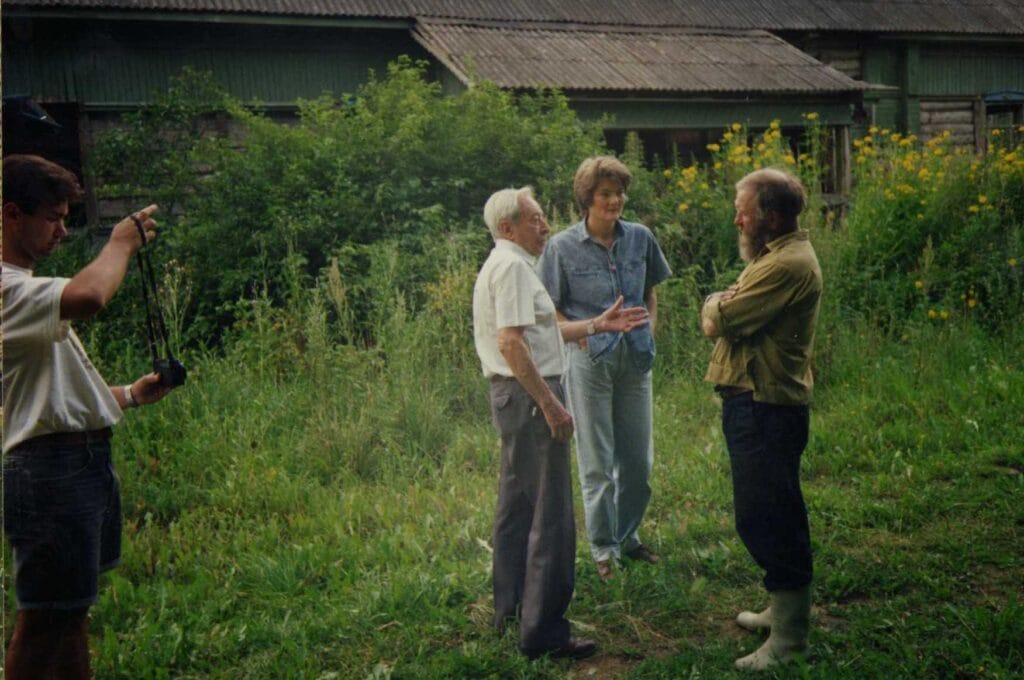
Shortly after the Soviet Union collapsed and travel became a reality, my brother and my grandfather—Saturnino’s son—returned to the Dymovo estate at Staritselo. They went looking for buried treasures that were long gone, but found something more haunting.
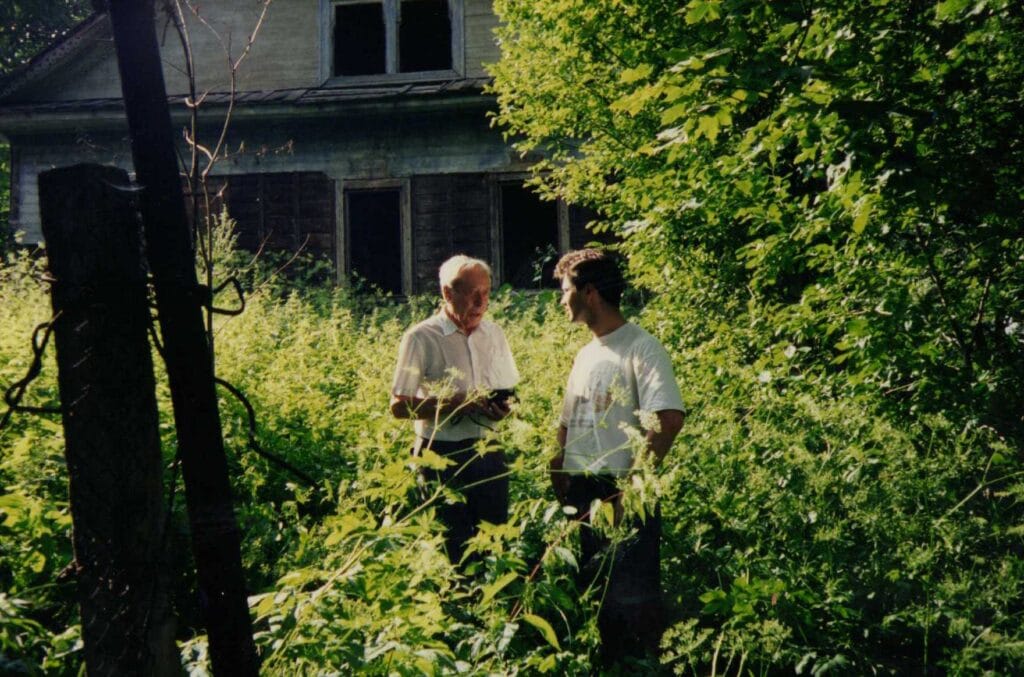
As they walked the grounds, an old man—once the young son of the groundskeeper when the family fled—came rushing out of the tall grass. He recognised my grandfather instantly, though they had both been mere lads when the world ended in 1917. "Nikolay, Nikolay! You have returned!" He had cared for the lands as best he could, just as his ancestors had before him. And then there was the talk of the treasure again. Say what now? Buried treasure? The legend was beginning to grow teeth.
The Library of Unfinished Sentences
In 2002, my grandfather passed away, leaving my father to inherit the family library. It was nowhere near the 25,000 volumes Saturnino claimed to have amassed, but it was a world unto itself.
There were the classics and scholarly works, but also a fair share of page-turning mysteries. There was the family bible, with our names inscribed going back generations. Photos emerged from the boxes, and for the first time, the strangers from the stories finally had faces.
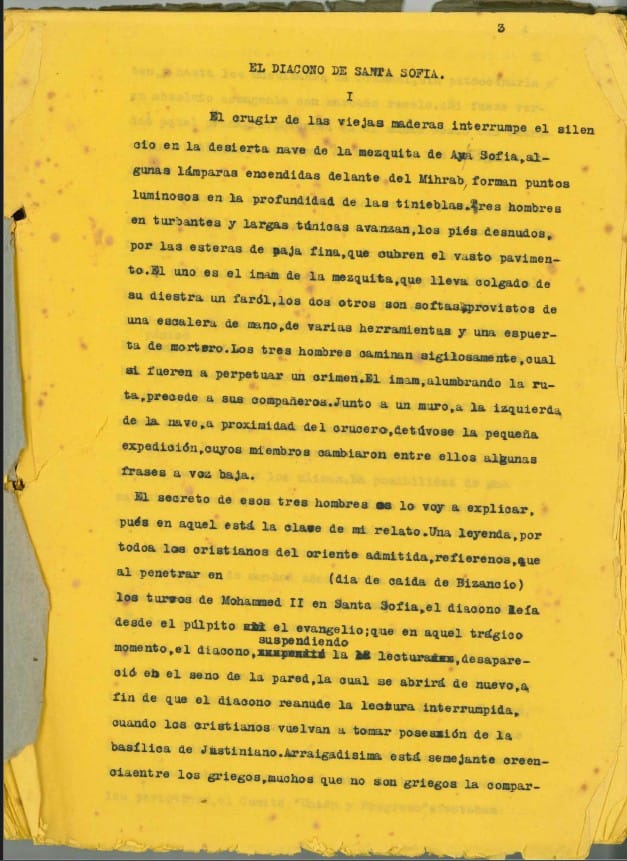
And then, there were the manuscripts. I discovered my abuelo had been writing a novel set at sea. But more tantalising was the rumour of Saturnino’s own unfinished manuscript—a novel cut short by a motorcycle on a Parisian street just before he could type the ending.
The IT Detective & The Startup Silence
Since the mid-nineties, I have (mostly) worked in IT. Whenever a new deep search capability emerged, I would use Saturnino as my test case. See if you can find that! I’d find an article here, a newspaper archive there, and I began a digital folder that followed me from one laptop to the next for over a decade.
Around 2009, the hits became more frequent. Digital archives were opening up. One day, I was found by Olga, a distant relative in Canada whose grandmother was Natalia’s aunt. Through her, I found the princess I had wanted to be as a little girl—new stories, new photographs, and a lineage that traced across the continent. Then came Juan Carlos García-Reyes, a Spanish academic writing his thesis on Saturnino. We traded snippets and promises of future research.
But then, life intervened. In 2013, I moved to Vietnam to start a company, and the digital folder became a silent passenger. Running a startup eats your soul. It consumes every hour, every hobby, and every interest. Work-life balance became a myth I no longer even tried to believe in. Over the next twelve years, the Saturnino Ximénez folder was moved from one laptop to the next, a ghost in the machine that I was too exhausted to summon. I lost touch with Olga, with the academic, and with the man in the records.
Tet 2025: The Folder Opens
Everything changed during the Lunar New Year of 2025. The company had just turned nine years old, and for the first time since I arrived in Southeast Asia, the gears of the startup actually ground to a halt. The team were away, the city of Saigon had fallen into that eerie, beautiful Tet silence, and I found myself with ten full days of unadulterated time. No dramas to fix, no investors to appease, no cover to provide.
In the quiet of a silent studio, I sat down at my desk, navigated through the directories of my hard drive and clicked. The Saturnino Ximénez Files flared to life on the screen—three decades worth of snippets, contradictory dates, and haunting faces. I took a breath and began to systematically review the history I had been carrying in my pocket since 1995...