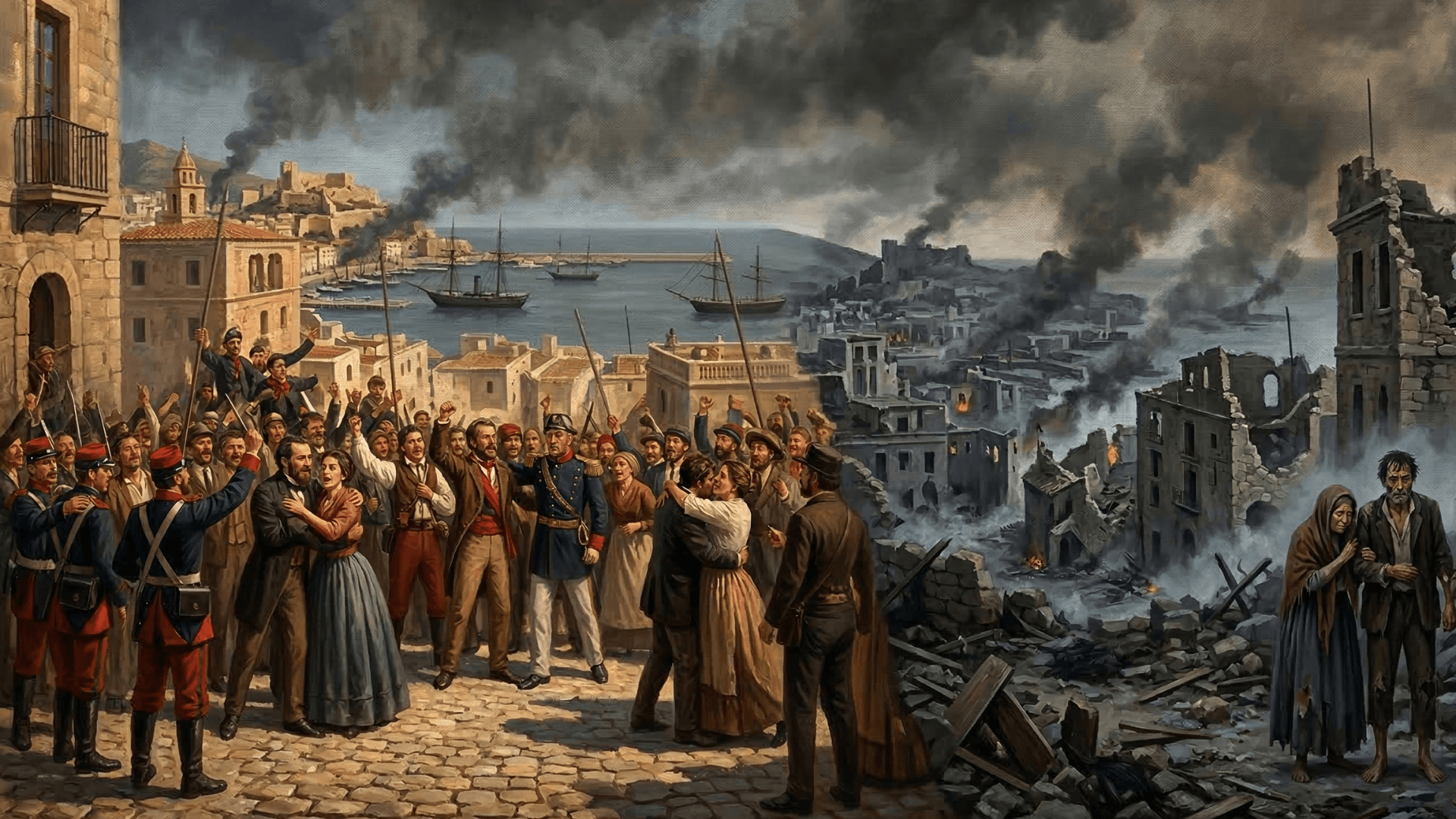
Cartagena Contrasts-Worlds Apart
(Reconstructing the Start and End of an Ill-fated Revolution)
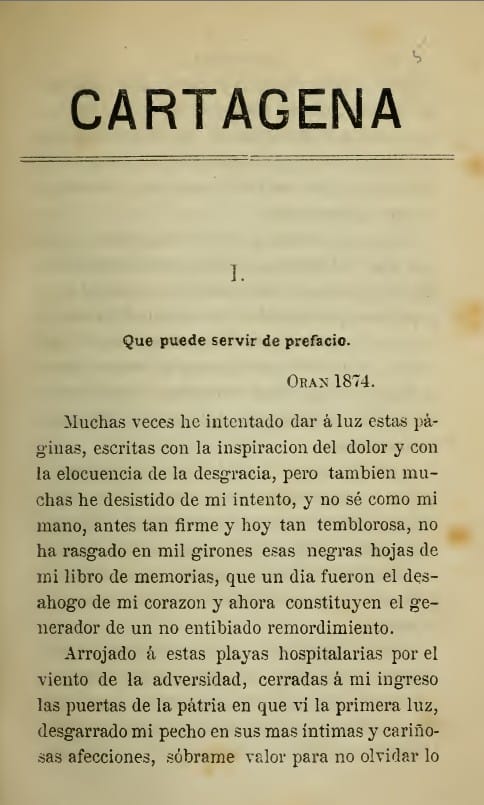
To read Saturnino’s 1875 memoir, Cartagena (Recuerdos Cantonales), is to witness a city hallucinating. Written shortly after his exile to Oran, Saturnino—writing under the working-class persona of a mechanic named "José"— describes the Rebellion with an almost cinematic attention to detail, creating a sensory map of a city’s descent. What begins in July 1873 as a sun-drenched carnival of liberty ends six months later in a grey, subterranean purgatory of starvation and explosive ruin.
The following reconstruction traces this descent, contrasting the naive euphoria of the "Cantón" with the apocalyptic reality of its collapse.
I. The Sounds of Revolution
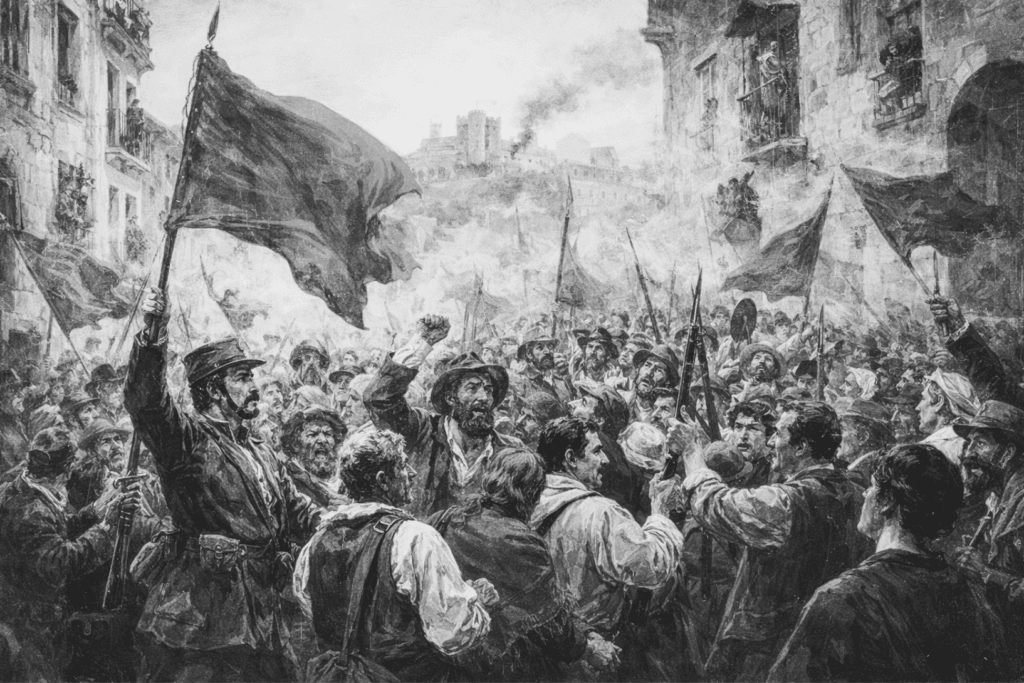
July 1873: The "Algarabía" The rebellion begins with noise, but it is the noise of joy. Saturnino describes the morning of 12 July not as a battle, but as an algarabía (clamour). The atmosphere is electric with "agitation," where conversation is heated and accompanied by wild gestures. When the cannon at the Galeras fortress announces the uprising at 4:00 AM, it is not a sound of war, but a signal of a "sacred promise" being fulfilled.
In these early days, the acoustic landscape is filled with the naive confidence of men who believe that their manifesto has caused the funds in the "Paris Bourse" to rise. The city buzzes with the sounds of "people armed to the teeth" marching with "roses" flying in the air, embracing soldiers and civilians alike in a "beautiful confusion."
January 1874: The "Trueno Horroroso" Six months later, the algarabía has been replaced by a "deafening din" (ruidoso estruendo). The singular cannon shot of July has multiplied into a relentless "hailstorm" of projectiles. The city no longer buzzes; it trembles.
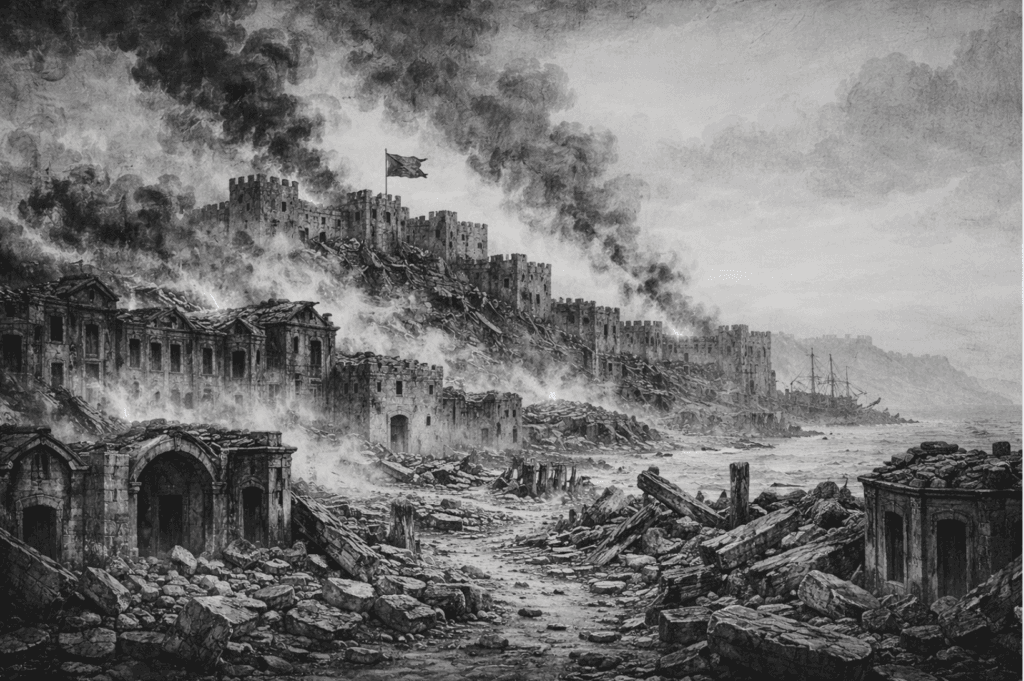
The auditory low point arrives on 6 January, with the explosion of the Artillery Park. Saturnino describes it as a «trueno prolongado y horroroso» (a prolonged and horrific thunder), a sound so immense it felt as if "the earth were going to sink." This is followed by the silence of the aftermath, broken only by the "stifled screams" and "pitiful curses" of the victims trapped in the rubble.
II. The Taste of Independence
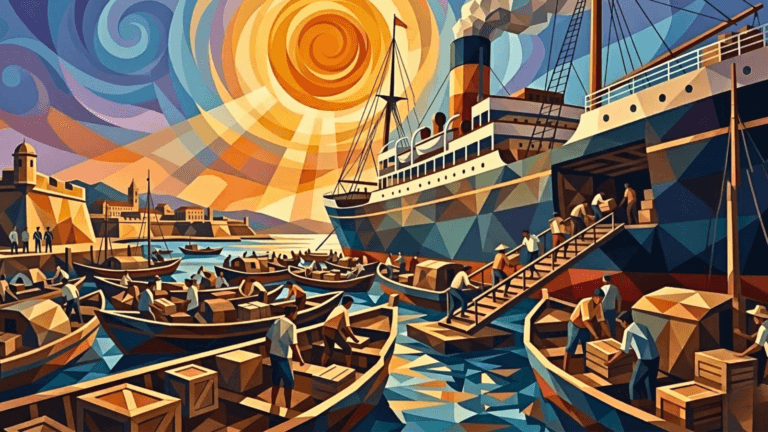
July 1873: The Feast of Hope In the beginning, the rebellion tastes of plenty. The "Cantonal" forces launch expeditions to neighbouring towns like Águilas, returning with ships loaded with 12,000 duros worth of wine, oil, flour, sheep, and pigs. The rebellion is fuelled by the adrenaline of incautaciones (seizures) and the belief that the resources of the rich belong to the people.
January 1874: Black Bread and Sardines By winter, the blockade has turned the city’s palate to ash. The diet of the defenders has been reduced to «pan negro y desabrido» (black, tasteless bread) made from damaged wheat, and an endless supply of "salted sardines" and cod.
Saturnino draws a bitter contrast between the starving populace and the Junta leaders. While the common "José" eats rancid bread, he notes with biting sarcasm that the leadership feasts on "slices of exquisite ham," cheese, raisins, and the best wines. The taste of the revolution has become the taste of class betrayal.
III. The Visuals of War
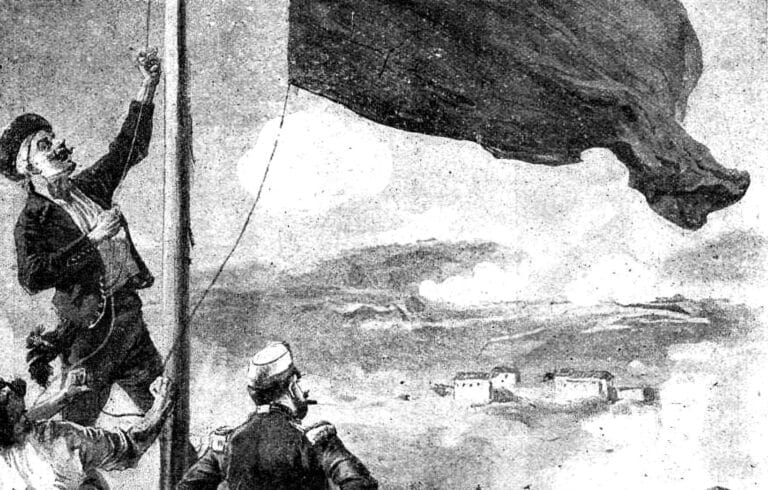
July 1873: The Red Flag and the Blue Sea The visual world of July is bright and saturated. The bandera roja (red flag) flies triumphantly from the fortresses, a stark splash of colour against the Mediterranean sky. The sea is a playground where the ironclads Numancia and Vitoria parade like "queens of the sea," their movements watched by admiring crowds on the docks.
January 1874: The Black Flag and the Ruins By January, the red flag has been joined—and eventually superseded in prominence—by the bandera negra (black flag) raised over the Castle of Galeras to signal no quarter. The visual landscape is now one of "ruins and desolation."
Saturnino describes the city as looking like "a cemetery on All Souls' Day." The most haunting image is the interior of the hospitals, where the smoke of the bombardment mixes with the dust of collapsing ceilings. In a surreal scene on Christmas Eve, he describes soldiers cooking rice inside the hollowed-out shell of an enemy grenade—a visual metaphor for life persisting inside the instruments of death.
IV. The Emotional Arc: From "Héroes" to "Sálvese quien pueda"
July 1873: The Domestic Soldier In the summer, the revolution is a family affair. Saturnino’s alter-ego José writes of his son, Pepito, playing with his rifle, aiming it at the "dolls in the corner" and feeling like a hero. There is a sense of shared destiny, a belief that they are "enacting a sacred promise."
January 1874: The Fracture By the end, the family unit is obliterated. Saturnino’s narrative fractures as José searches the ruins for his wife and daughter, eventually learning that his wife has died and been buried in a mass grave, while his daughter hides in the vaults of the city gates.
The "sacred promise" dissolves into a panic of "save who can" (sálvese quien pueda). The memoir concludes with the shameful flight of the Junta on the Numancia, slipping out of the harbour at 5:00 PM on 12 January to escape the very destruction they helped invite. The final contrast is absolute: the "kings of the littoral" end up disarmed and detained on the shores of Algeria, their revolution reduced to a "tail that continued to twitch" after the head had been cut off.
The Echoes of the Siege
These "Cartagena Contrasts" are the sensory scars of a city that dared to dream beyond its borders. To walk through Cartagena today is to encounter a modern city built upon these unresolved echoes—a place where the Mediterranean breeze still seems to carry the faint, impossible scent of a revolution that burned too bright and died too suddenly.