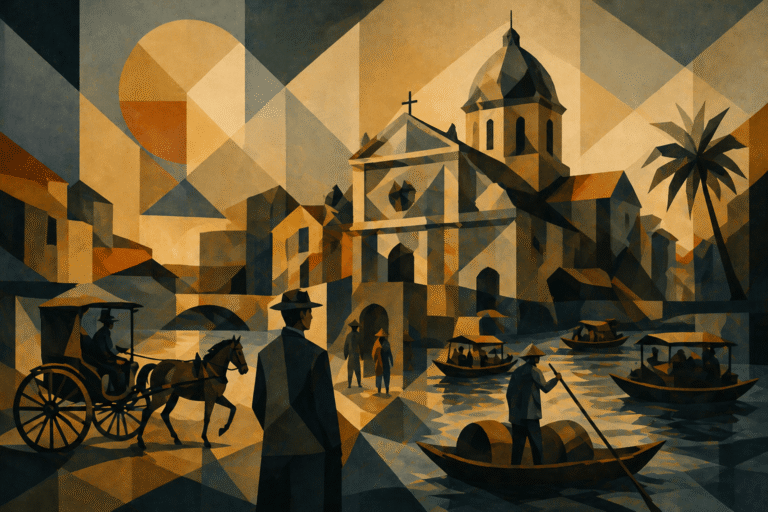

The Firewall and the Bridge
Writing a Legacy Across the Great Blur
There is a specific kind of vertigo that comes from researching a man whose blood you share, but whose life was designed to be a series of vanishing acts. As I sit with the fragments of Saturnino Ximénez’s life—the birth certificates from Menorca, the mastheads of Barcelona journals, the scathing Russian obituaries—I am constantly navigating two opposing forces.
I call them The Firewall and The Bridge.
The Firewall: Protecting the Archive
The Firewall is my commitment to the historical man. Saturnino Ximénez Enrich was not a character I invented; he was a polyglot, a survivor of the Bolshevik Revolution, and a pioneer of humanitarian historiography. While his multifaceted life can be viewed through many lenses, Saturnino Ximénez's enduring legacy is that of a transitional figure who embodied the contradictions of his era.
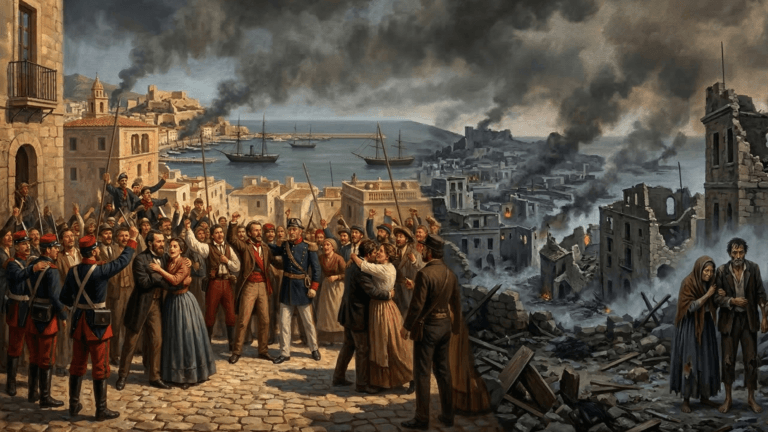
The Firewall exists to ensure that the real Saturnino is never swallowed by the fiction. He earned his place in history through a staggering display of intellect and endurance. To conflate his real accomplishments with my imagined plots would be a disservice to the man who stood in the smoking ruins of Cartagena, conquered the "Black Legend" of the Kelishin Stele, and climbed Mount Olympus, aged 70.
To honor him, the Firewall must remain as robust as the evidence allows. Within these Archive Files, I strive for a high standard of historical accuracy. When I reference a specific detail it is because the surviving primary records point there. However, history is a living field; as academics continue to re-examine Saturnino’s life and new research emerges, our picture of him remains an evolving one.
The Ancestral Debt: The Ethics of the Bloodline
Fictionalizing a stranger is a creative exercise; fictionalizing a great-grandfather is an ancestral debt. There is an inherent fear of betrayal that haunts every page of The Mariquina Manuscript. In the novels, I have to place Saturnino in situations that are morally grey, dangerous, and perhaps even "sinister"—the very word Josep Pla used to describe him.
The complication lies in the tension between family pride and narrative truth. As a descendant, I want to celebrate his brilliance. As a novelist, I must explore his shadows.
Saturnino was a man of the "Great Blur," a master of curated truths. Writing about him requires a delicate negotiation: does his own penchant for myth-making give me permission to mythologize him further, or am I merely falling into the traps he laid a century ago? By projecting a fictional vocation onto his real history, I am essentially collaborating with a ghost.
The Bridge: Navigating the Silences
The Bridge is the novel. The official records are riddled with significant gaps, so I use the novels to illuminate the blindspots of his history, projecting the man he might have been into the silences we cannot otherwise reach. It is the narrative architecture I build to cross the "lacunae"—the vast silences where the official record goes dark.
Where the archival ink fades, the Bridge begins. I use the novels to explore the nature of the man behind the facts. Saturnino’s insatiable thirst to understand the world inevitably led him toward a spy-like existence. The Bridge allows me to project his known traits—his linguistic genius, his skepticism of authority, his Myth Maker instincts—into the rooms where the doors were closed to history.
By establishing a distinct point of origin for this fictional version of him, I can better navigate the boundary between the documented and the imagined—clarifying exactly where the archival ink fades and the narrative begins.
Writing as Guiomar Bruidegom
This is also why I write as Guiomar Bruidegom. The pseudonym is another layer of the Firewall. It creates a space where I can be an investigator of the real and a weaver of the imagined without the two identities interfering.
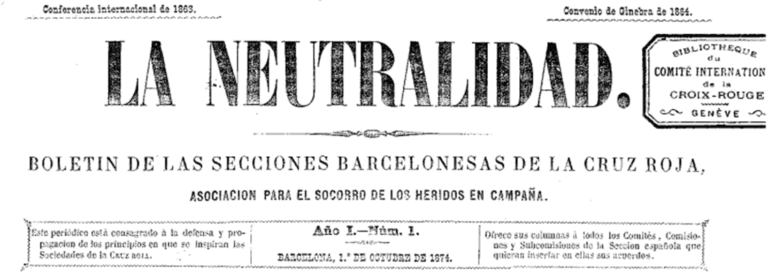
Barbara is Saturnino’s great-granddaughter. Guiomar is the one who walks the Bridge. She is the one who asks the uncomfortable questions that the official archives cannot answer. She looks for the man behind the mask, using the tools of fiction to find a psychological truth that the dry records of the Red Cross or La Vanguardia could never convey.
The name serves as a psychological buffer, granting me the creative license to be ruthless with the narrative in ways that my real-world identity might find restrictive. It allows the novelist to ask the irreverent or dark questions that a family historian might hesitate to voice, ensuring that the search for a compelling story is never hindered by a misplaced sense of ancestral propriety.
This separation is formalized within the structure of the books themselves: each novel concludes with an extensive "Fact vs. Fiction" section in the back matter, explicitly detailing the historical anchors and the creative leaps taken.
The Goal of the Project
The ultimate goal of The Saturnino Ximénez Files is not to provide a definitive biography. Instead, it is to invite you into the process of discovery.
I want you to see the real Saturnino Ximénez Enrich—the Menorcan who conquered the world through his wits. And I want you to walk the Bridge with me—the fictional path where we imagine how that same man might have navigated the most dangerous secrets of the 19th century.
One honors the legacy. The other brings it to life.