The Ottoman Flag of the Cantonal Rebellion
In the annals of revolutionary history, few stories sound more like a tall tale than that of the Ottoman Flag of the Cantonal Rebellion of 1873. The legend goes that a group of Spanish radicals, lacking a proper banner, hoisted the flag of the Ottoman Empire over the Castle of Galeras and then smeared it with human blood to make it more revolutionary. While it sounds like a plot point from a historical satire, this event is grounded in documented fact.
The Logistics of an Accidental Flag
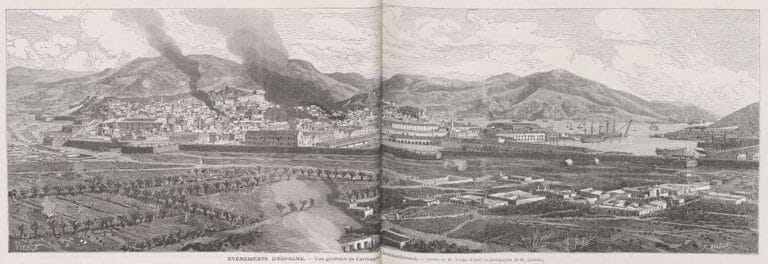
On the afternoon of 12 July 1873, the insurgents in Cartagena successfully seized the naval base and its surrounding fortifications. To signal their victory to the city and the fleet below, they needed to hoist the red flag—the international symbol of federalism and social revolution.
However, the rebels faced a sudden, almost comical logistical hurdle: they didn’t have one.
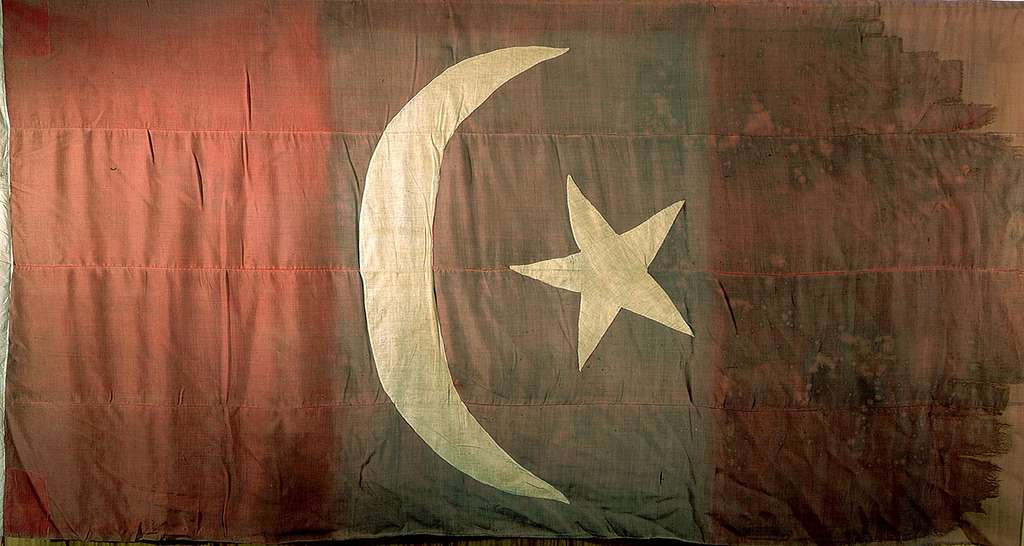
The naval storehouses were filled with the flags of various nations used for diplomatic signalling, but a plain red revolutionary banner was nowhere to be found. What they did find, however, was the flag of the Ottoman Empire—a bright red field featuring a white crescent moon and a five-pointed star.
The “Bloody” Modification
Hoisting the Turkish flag as-is would have been disastrous. It would have signalled to the Spanish fleet and the foreign warships in the harbour that the Ottoman Navy had somehow staged a Mediterranean coup.
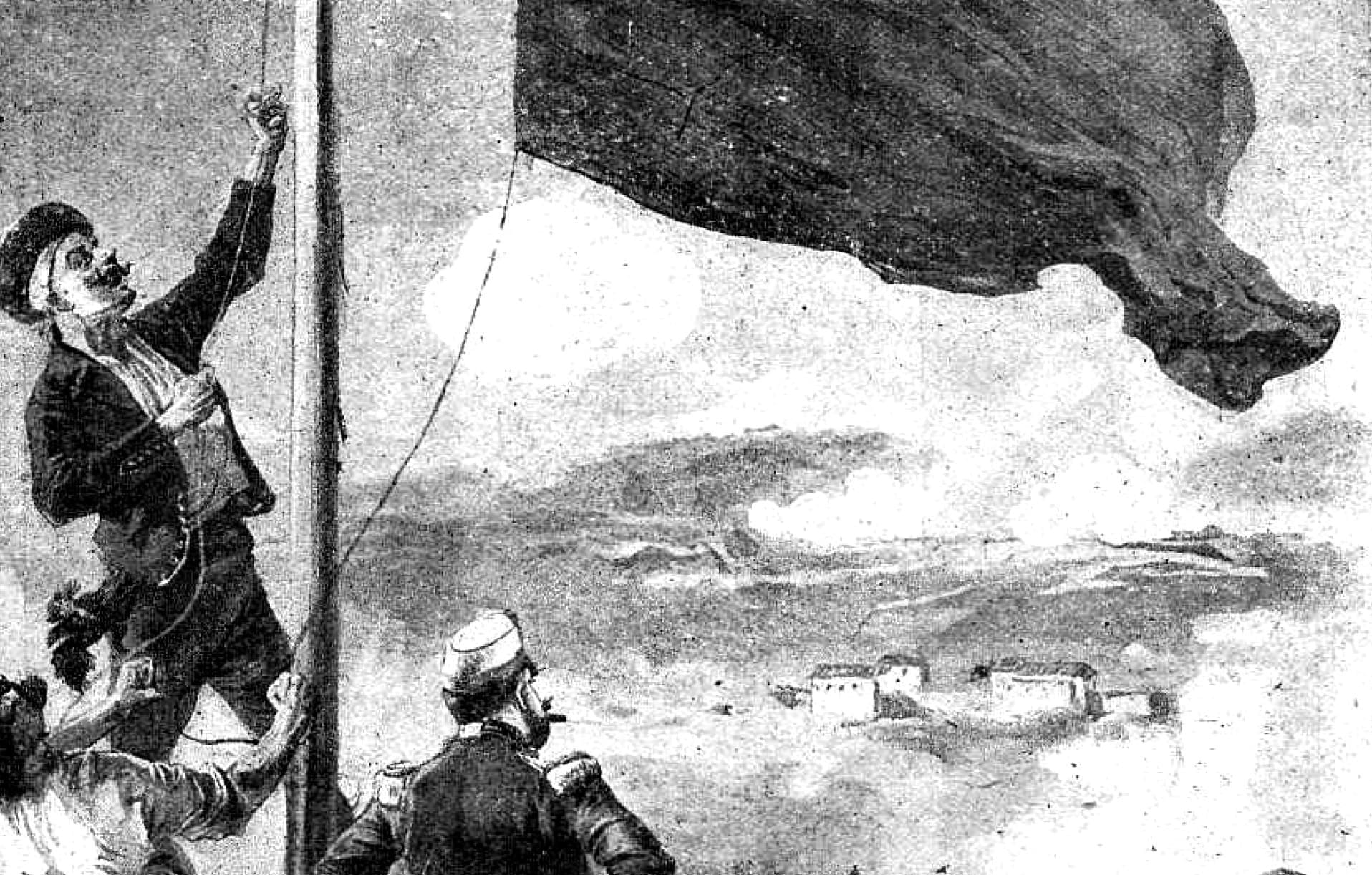
According to the primary accounts of the time, and later corroborated by historians like Antonio Puig Campillo, a rebel volunteer stepped forward to solve the problem. He didn’t have red paint, so he used the only resource available to a desperate revolutionary: He pricked his own arm (some accounts say it was his hand or forehead) to draw blood and smeared it over the white crescent and star until the symbols were sufficiently darkened to look red from a distance. The bloody flag was raised over the Castle of Galeras.
The Confusion in the Harbour
The ruse worked, albeit briefly. From the city below, the flag appeared to be the solid red banner of the “Social Republic.” However, as the sun hit the fabric, the slightly different texture of the dried blood compared to the red fabric caused confusion among the naval officers in the harbour.
For several hours, the official reports from the Spanish naval command were a mix of panic and bewilderment, as they tried to determine why a “Turkish” flag was flying over a Spanish military stronghold.
A Metaphor for the Cantonal Rebellion
The Ottoman flag incident serves as the perfect metaphor for the Cantonal Rebellion itself: a movement defined by intense improvisation, a touch of the macabre, and a total disregard for traditional international optics.
For a few days in the summer of 1873, the “Canton of Murcia” was technically flying the colours of a Sultan, modified by the veins of a Spaniard.