Fact or Fiction? The American Annexation Request of 1873
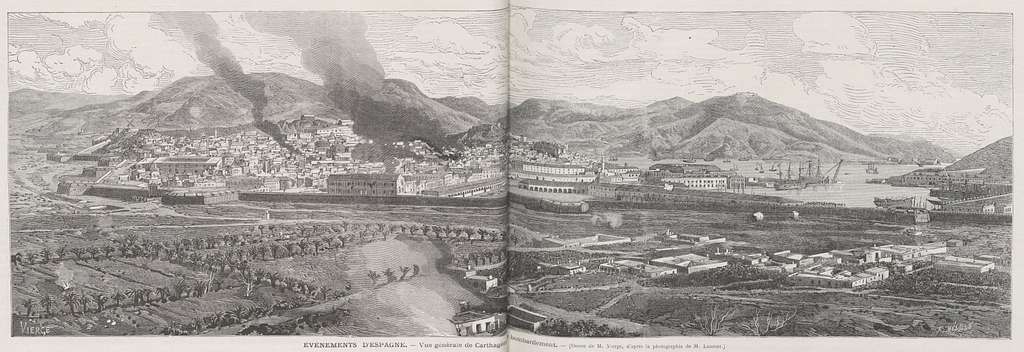
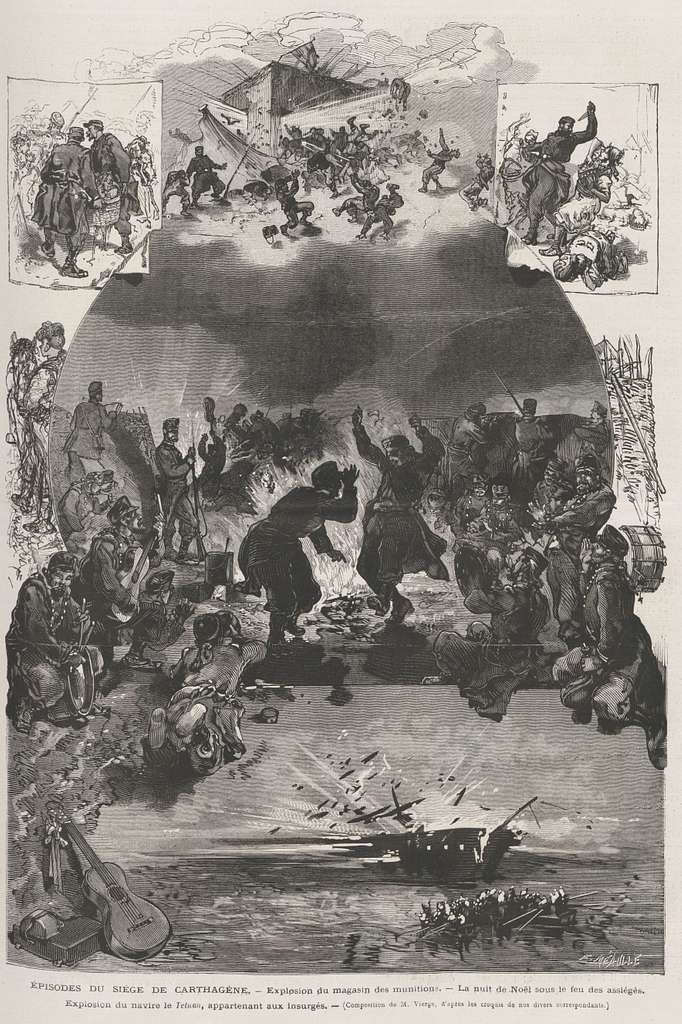
One of the most bizarre diplomatic footnotes of the 19th century occurred in December 1873. As the Spanish government’s artillery battered the walls of Cartagena, the rebel leadership—facing total annihilation—turned their eyes across the Atlantic towards the United States.
The claim? That a group of Mediterranean revolutionaries asked to become the 38th state of the Union.
The Letter to President Grant
On 16 December 1873, Roque Barcia, the intellectual leader of the Cartagena junta, drafted a formal appeal to U.S. President Ulysses S. Grant. Delivered via the American ambassador in Madrid, Daniel E. Sickles, the request was as audacious as it was desperate.
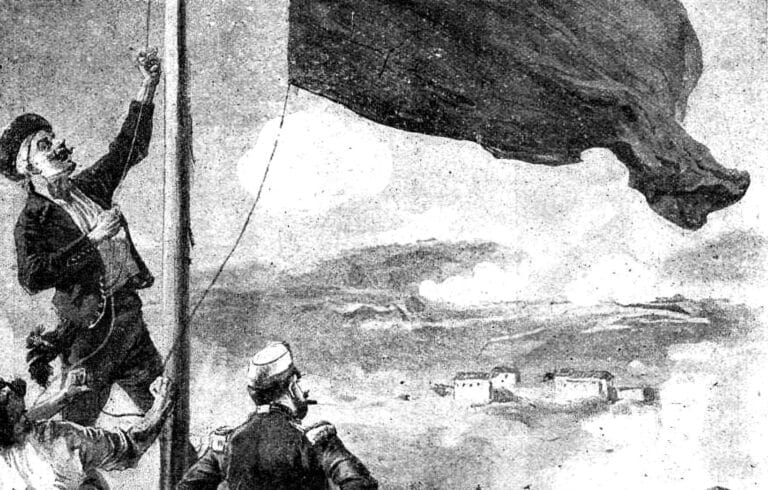
The purpose of the letter was to secure authorization to hoist the Stars and Stripes over fortifications and ships. Their logic was rooted in a volatile mix of political idealism and cold military necessity:
- Ideological Kinship: The Cantonalists viewed their “Federal Republic” as a mirror of the American system—a collection of autonomous states (cantons) united under a weak central government.
- The “Human Shield” Strategy: If Cartagena were to hoist the Stars and Stripes, the rebels believed the Spanish government would not dare continue the bombardment for fear of sparking a war with the United States.
- Annexation or Protection: The rebels never went so far as to propose that Cartagena become part of the American Union, they hoped to use the U.S. flag for protection during the siege, in effect declaring the Canton a protectorate.
The “Sickles” Connection
The choice of intermediary was significant. The U.S. Ambassador, Daniel Sickles, was a controversial Civil War general known for his erratic behaviour and Manifest Destiny expansionist views. While Sickles personally sympathised with the Republican cause in Spain, he was also a pragmatist. He knew that the U.S. government—still recovering from its own Civil War and dealing with the Panic of 1873—had zero interest in a Mediterranean colony.
The U.S. Response: Silence and Rejection
The Grant administration never seriously considered the proposal. To Washington, the request was a diplomatic landmine.
- Geography: A single city on the Iberian Peninsula was a logistical nightmare to defend.
- Diplomacy: Protecting Cartagena would have meant war with Spain and likely interference from Britain and France, who viewed the Mediterranean as their private lake.
- The Monroe Doctrine: U.S. policy was focused on keeping Europeans out of the Americas, not on the U.S. jumping into European territorial disputes.
The request was ignored, and the rebels were left to face the Spanish mortars alone.
The Verdict: FACT(ish)
It is a historical fact that the “Murcian Canton” sought protection from the U.S. in a last-ditch effort to survive through international diplomacy.
While later accounts and local lore sometimes phrase it as a “request to join the United States,” the actual wording and historical intent centred on using the U.S. flag for protection during the siege, not on formal U.S. annexation.