
Cartagena: Recuerdos Cantonales
(The Baptism of Fire and the Literary Mask)
If Saturnino Ximénez’s life were a novel, the chapter set in the naval stronghold of Cartagena during the First Spanish Republic would be its most violent climax. At just twenty years old, Saturnino found himself trapped—or perhaps willingly embedded—in a city that had declared itself an independent sovereign state, severing ties with the central government in Madrid. The result of this experience was his first major intellectual output: Cartagena (Recuerdos Cantonales). This text is more than a memoir; it is a masterclass in the “Great Blur,” where the lines between history, political propaganda, and personal fiction are intentionally erased.
The Literary Avatar: “José” the Mechanic
History and archival records from the Spanish Red Cross confirm that Saturnino served as a “functionary” in the revolutionary government and was a “militant republican-federalist.” However, when it came time to write the story, the twenty-year-old intellectual chose to hide.
The protagonist of his memoir is not a young, polyglot journalist, but a man named José. In the book, José is a humble mechanic in the machinery section of the Maestranza (the naval arsenal). Through this fictional working-class avatar, Ximénez narrates the “human cost of political idealism.”
By providing José with a wife named Angela and two children—a domestic stability the real Saturnino did not possess in 1873—Ximénez created a layer of plausible deniability. This narrative distance allowed him to critique the chaos of the revolution while presenting the insurgent not as a political monster, but as a father swept up in a maelstrom beyond his control.
The City of Fire
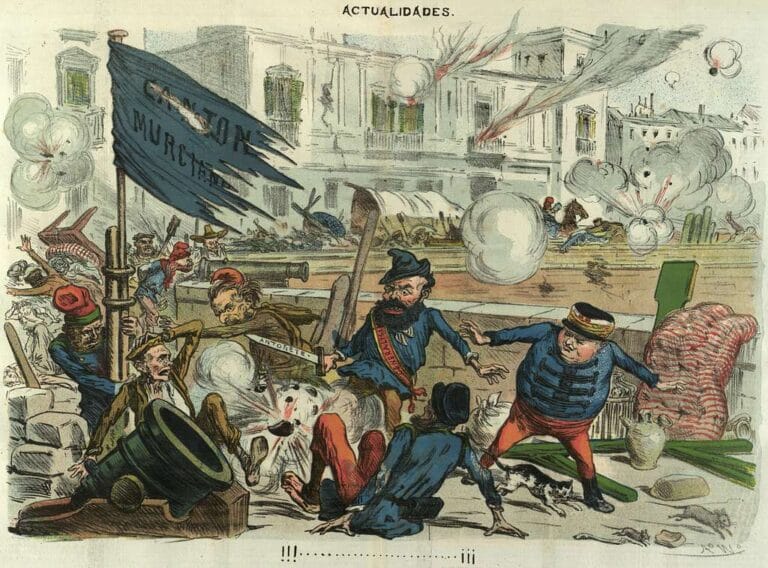
The dossier provided by Recuerdos Cantonales details the absolute devastation Saturnino witnessed. He chronicles the early “delirium” of the revolution: the minting of the duro cantonal (silver coins of higher quality than the official currency) and the “Pirate Decree” from Madrid, which labeled the rebel fleet as international outlaws.
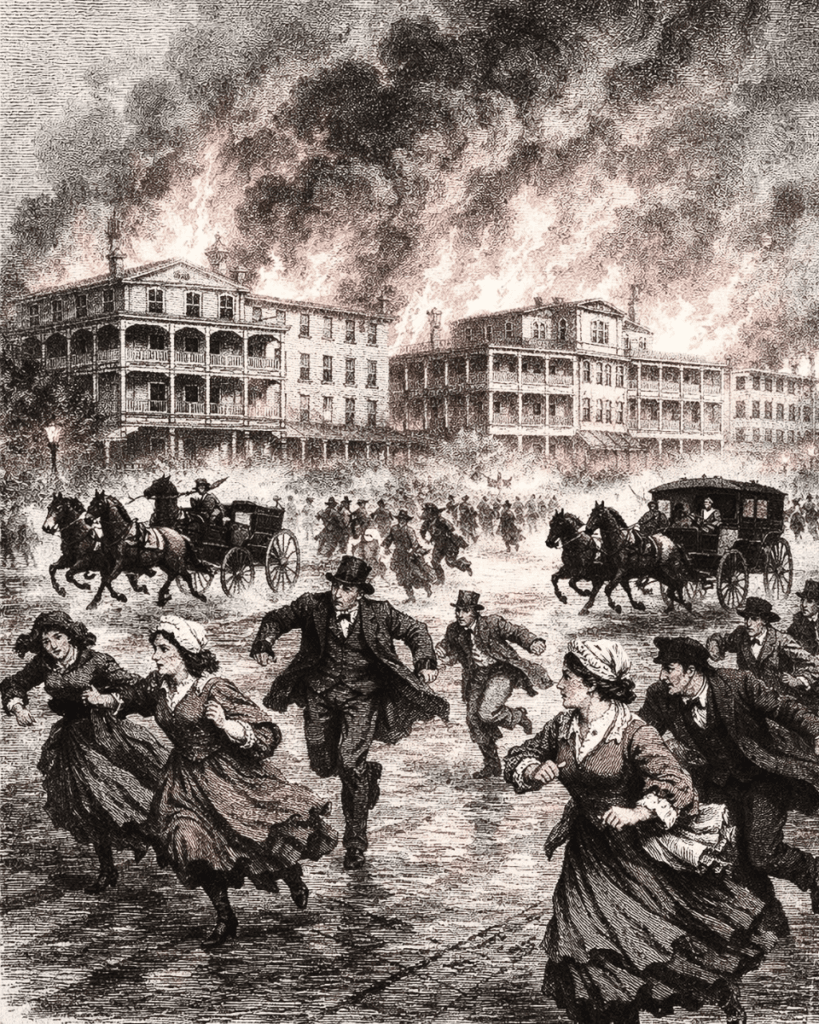
The turning point was the bombardment. Ximénez writes of a city turned into a “Gehenna,” where the population spent months hiding in the damp vaults of the sea walls and the ancient caves beneath the Castle of Concepción. He captures the psychological terror of the shelling with a haunting precision:
“There is nothing comparable to the terror that seizes a population in the first hours of a bombardment… a panic that blinds.”
The climax of this period was the cataclysmic explosion of the Artillery Park in January 1874. Hundreds of citizens had sought refuge within its thick walls, only to be buried alive when enemy fire ignited the munitions stores. Ximénez describes the harrowing scene of digging through the smoking rubble, listening to the muffled “ayes” (groans) of the dying—a sensory trauma that would haunt his later descriptions of the “ruins of empire.”
The Humanitarian Agenda
While the book purports to be a war memoir, modern analysis reveals a hidden layer: it was a calculated vehicle for the Spanish Red Cross. Even amidst the shelling, Ximénez highlights the role of the “International Association” constantly. He describes the “White Flag with the Red Cross” as the only symbol of sanity remaining in the carnage.
He details the heroic efforts of Antonio Bonmatí, the President of the Red Cross in Cartagena, who negotiated truces to evacuate women and children. This focus suggests that even at twenty, Ximénez was already constructing his persona as a “Neutral Observer.” He was learning that by aligning himself with humanitarianism, he could navigate dangerous political landscapes—whether in Spain or, in fiction, in the colonial Philippines—without being pinned down by a single faction.
The Great Escape: The Flight of the Numancia
As the Canton collapsed on January 12, 1874, the revolutionary junta realized resistance was a death sentence. In a daring move, they boarded the ironclad frigate Numancia—the jewel of the Spanish fleet—and prepared to break through the government blockade.
Ximénez describes the escape in cinematic, almost reverent terms. The massive ship, carrying over a thousand refugees, charged into the Mediterranean night.
“The Numancia passes victorious, without suffering damage, and in less time than a rooster crows, is lost from sight on the horizon.”
The ship arrived in Mers-el-Kébir, near Oran, Algeria, the next morning. Ximénez claims to have been among those who flooded the African beaches, stripped of their weapons and identities by the French authorities.
Status Assessment: The Fog of Exile
The file concludes with a persistent historical discrepancy. While Saturnino claimed to have written the preface to his book in “Oran, 1874,” and historians have long accepted his status as an exiled refugee, there is compelling evidence he may have remained in Barcelona or returned almost immediately.
The “Oran Ultimatum” dossier suggests that the African exile may have been another “Romantic Misinterpretation”—a cover story that allowed him to operate freely in Catalonia while the central government hunted for “pirates.” Whether he truly languished in an Algerian camp or hid in plain sight in a Barcelona newsroom, one thing is certain: the Saturnino Ximénez who emerged from the ruins of Cartagena was no longer a naive radical. He was a survivor who had learned that in war, the most powerful weapon is not the cannon, but the ability to write the history of the explosion.